Is Timing Everything? – Osho

Is it true to say that timing is everything?

No, it is not true to say that timing is everything, because once you start thinking that timing is everything, you will stop seeking, searching. You will simply wait for the spring to come, you will become absolutely unaware of the fact that for enlightenment no season is right or wrong, no climate is right or wrong. Every moment is right; you just have to catch hold of your own being. But it has been said even by Gautam Buddha that timing is needed.

I want you to know that Gautam Buddha is simply trying to console those who cannot gather courage in this moment. He does not want to discourage them by saying, “You will never become enlightened.” He is saying, “You will become enlightened, just wait for the time, for the ripening, for the cause.”

But I say unto you, in spite of Gautam Buddha, that no timing is needed, no causation is needed, because you are already enlightened. It is just that you are afraid to declare it, you are just afraid of what people will say . . . “I am enlightened? People will laugh, they will say, ‘Look at this fellow, he is enlightened.’”

Every day Neelam brings news to me that somebody is creating trouble, walking naked in the ashram because he thinks he has become enlightened. But just walking naked has nothing to do with enlightenment.

One woman was declaring herself a master and one man declaring his enlightenment – and both are cuckoos. So I told Neelam, “It is better to put both the cuckoos together.” The woman has been declaring herself for almost fifteen years. I said, “Neelam, tell the woman that if she is really a master and enlightened, take care of this fellow. He is very new, needs care.” And that fellow is a much bigger cuckoo.

The woman was cured. She said, “I am no more . . . he is too much. I take my words back that I am enlightened or I am a master . . . If this man has to be taken care of, I refuse. I will be simple from now onwards.” And for three, four days she has proved simple. The greater cuckoo managed to make the smaller cuckoo silent. Now Neelam was asking me what to do with the remaining cuckoo. I said, “Simply wait, somebody will be coming who is bigger. Give this one into his charge and tell him, ‘Here is your first disciple.’ There is no other way.”

And then Anando told the enlightened man that, “You either be silent and stop disturbing other people or you will be given to a greater cuckoo.” For at least one and a half days he has been behaving silently, just being afraid, because here there are so many potential cuckoos! I have even told Neelam to make a special office and department where cuckoos meet and discuss their enlightenment.

Enlightenment is not something that you have to shout on the streets, enlightenment is your recognition of your silent inner flame. It will make you saner, not a cuckoo; it will even help create a certain energy field around you which can trigger other people to enlightenment. But you don’t have to be a nuisance. You cannot force anybody to enlightenment. You can kill someone, that is not difficult, but even dead he will remain unenlightened. Enlightenment is not something that can be done from outside.

But from the outside, situations can be created, devices can be created in which suddenly you become aware of your own self. The master himself, his presence, is nothing but a situation; those who are thirsty will draw water from the well. But the thirst has to be authentic; otherwise, people go on standing by the side of the well, thirsty, and their thirst is either intellectual or just a curiosity to know what this enlightenment is. It has to be a tremendously powerful longing in you, a very life and death question – then there is no barrier, then there is no timing.

So even though it goes against Gautam Buddha’s statement, I will not say that you have to wait for tomorrow. Do it now, this is the time!

-Osho

From This. This. A Thousand Times This: The Very Essence of Zen, Discourse #10

Copyright © OSHO International Foundation

An MP3 audio file of this discourse can be downloaded from Osho.com or you can read the entire book online at the Osho Library.

Many of Osho’s books are available in the U.S. online from Amazon.com and Viha Osho Book Distributors. In India they are available from Amazon.in and Oshoworld.com.

Sleep, Identification, Duality – Osho

Lack of awareness is taking the transient for the eternal, the impure for the pure, the painful as pleasurable and the non-self for the self.

Egoism is the identification of the seer with the seen.

Attraction, and through it, attachment, is towards anything that brings pleasure.

Repulsion is from anything that causes pain.

-Patanjali’s Yoga Sutras

What is avidya? The word means ignorance, but avidya is not ordinary ignorance. It has to be understood deeply. Ignorance is lack of knowledge. Avidya is not lack of knowledge but lack of awareness. Ignorance can be dissolved very easily; you can acquire know ledge. It is only a question of training the memory. Knowledge is mechanical; no awareness is needed. It is as mechanical as ordinary ignorance. Avidya is lack of awareness. One has to move towards more and more consciousness, not towards more and more knowledge. Only then can avidya be dissolved.

Avidya is what Gurdjieff used to call ‘the spiritual sleep’. Man moves, lives, dies, not knowing why he was alive, not knowing from where he was coming, not knowing where he was moving, for what. Gurdjieff calls it sleep, Patanjali calls it avidya: they mean the same thing. You don’t know why you are. You don’t know the purpose of your being here in this world, in this body, in these experiences. You do many things without knowing why you are doing them, without knowing that you are doing them, without knowing that you are the doer. Everything moves as if in a deep sleep. Avidya, if I am to translate it for you, will mean ‘hypnosis’.

Man lives in a deep hypnosis. I have been working on hypnosis, because that is the only way to bring man out of hypnosis, to understand it. All awakening is a sort of dehypnotization, so the process of hypnosis has to be understood very, very clearly. Only then can you move out of it. A disease has to be understood, diagnosed; only then can it be treated. Hypnosis is the disease of man, and de-hypnosis will be the way. […]

I worked on many people, and this is my finding: that a person who can be hypnotized can be de-hypnotized, and a person who cannot be hypnotized finds it very difficult to move on the spiritual path, because the ladder goes both ways. If you can be hypnotized easily, you can be de hypnotized easily. The ladder is the same. Whether you are hypnotized or de-hypnotized, you move on the same ladder; only the directions differ.

Suddenly a woman looks attractive to you, or a man, but do you know the reason why? It is something like hypnosis. Of course, it is natural; nobody has hypnotized you; nature has hypnotized you. This power of nature to hypnotize is what Hindus call maya, the power of illusion. You are under an illusion, in a deep hallucination. You live like a somnambulist; fast asleep you go on doing things, not knowing why. And whatsoever reasons you give are rationalizations, they are not true reasons.

You see a woman, you fall in love, and you say, ‘I have fallen in love.’ But can you give the reasons why? Why has it happened? You will find some reasons. You will say, ‘Her eyes are so beautiful, the nose so shapely, and the face like a marble statue.’ You will find reasons, but these are rationalizations. In fact, you don’t know, and you are not courageous enough to say that you don’t know. Be courageous! When you don’t know, it is better to know that you don’t know. That will be a breaking point. You may come out of the whole hallucination that surrounds you. Patanjali calls it avidya. Avidya means lack of awareness. This is happening because of lack of awareness.

What happens in hypnosis? Have you ever watched a hypnotist, what he does? First, he says, ‘Relax.’ And he repeats it, he goes on saying, ‘Relax, relax, relax . . . ‘ Even the continuous sound of ‘relax’ becomes a mantra, a T. M. That’s what happens in T. M. You repeat a mantra continuously; it gives sleep. If you have a case of insomnia, then T. M. is the best thing to do. It gives you sleep, and that’s why it has become so important in the United States. The United States is the only country which is suffering deeply from insomnia. Maharishi Mahesh Yogi is not just an accident there, he is the need. When people suffer from insomnia, they cannot sleep, they need tranquilizers. And Transcendental Meditation is nothing but a tranquilizer — it soothes you. You continuously repeat a certain word: Ram, Ram, Ram. Any word will do: Coca. Cola, Coca Cola — that will do; it has nothing to do with Ram. Coca-Cola will be as perfect as Ram, or even more so, because it is more relevant. You repeat a certain word continuously; the continuous repetition creates a boredom, and boredom is the base for all sleep. When you feel bored you are ready to go into sleep.

A hypnotist goes on repeating, ‘Relax, relax.’ The very word penetrates into your body and being. He goes on repeating it and he tells you to cooperate, and you cooperate. By and by, you start feeling sleepy. Then he says, ‘You are falling deeply asleep — falling, falling, falling into the deep abyss of sleep’ — he goes on repeating. And just by repetition you fall asleep.

This is a different type of sleep. It is not ordinary sleep because it is induced; somebody has induced it in you. Because somebody has induced it, it has a different quality. The first difference, and very basic, is that you will be asleep for the whole world but not for the hypnotist. You will not listen to anything now; you will not be able to hear anything now. Even if a bomb explodes it will not disturb you. The trains will pass, the airplanes will fly, but nothing will disturb you. You will not be able to hear anything. You are closed to the whole world but open to the hypnotist. If he says something, you will immediately listen, you will listen only to him. There is only one opening left — the hypnotist, and the whole world is closed. Whatsoever he says you will believe, because your reason has gone to sleep. Intelligence doesn’t function. You have become like a small child who has trust, so whatsoever the hypnotist says, you have to believe. Your conscious mind is not functioning; your conscious mind has gone to sleep. Only the unconscious mind functions. Now even an absurd thing will be believed. If the hypnotist says that you have become a horse, you cannot say, ‘No,’ because who will say no? In deep sleep, trust is perfect; you will become a horse, you will feel like a horse. And if he says, ‘Now you neigh like a horse,’ you will neigh. If he says, ‘Gallop, jump like a horse,’ you will jump and gallop.

Hypnosis is not ordinary sleep. In ordinary sleep you cannot say to somebody that you have become a horse. In the first place, if he hears you he is not asleep. In the second place, if he hears you and he is not asleep, he will not believe what you are saying. He will open his eyes and laugh and say, ‘Have you gone mad? What are you saying? Me, a horse?’

Hypnosis is induced sleep. It is more like an intoxicant than like sleep. You are under the influence of a drug. The drug is not chemical ordinarily, but it is chemical deep down in the body. Just the repetition of a certain word changes the chemistry of the body. That is why mantras have been so influential all through the history of man. Continuously chanting a particular word changes the chemistry of the body because a word is not just a word; it has vibrations, it is an electric phenomenon. The word vibrating continuously: Ram, Ram, Ram — Ram passes through the whole chemistry of the body. The very vibrations are soothing; they create a small humming inside you just as a mother will sing a lullaby when a child is not going to sleep. A lullaby is a very simple thing: one or two lines continuously repeated. And if the mother can take the child near her heart, then the effect will happen sooner because the heartbeat gives another rhythm. The heartbeat and a lullaby both together, and the child is fast asleep. This is the whole trick of chanting and mantras: they give you a good induced sleep; you will feel fresh afterwards. But there is nothing spiritual in it. There is nothing spiritual because spirituality is concerned with being more aware, not less aware.

Watch a hypnotist. What is he doing? Nature has done the same to you. Nature is the greatest hypnotist; it has given you suggestions. Those suggestions are carried by the chromosomes, the cells of your body. Now scientists say that a single cell carries almost ten million messages for you. They are in built. When a child is conceived, two cells meet: one from the mother, and one from the father. Two chromosomes meet; they bring millions of messages. They become the blueprint, and a child is born out of those basic blueprints. They go on multiplying; that’s how the body increases.

Your whole body is made of small invisible cells, millions of them. And each cell carries messages, just like each seed carries the whole message for the whole tree: what type of leaves will come out of it, what type of flowers will come out of it, whether they will be red or blue or yellow. A small seed carries the whole blueprint for the whole life of the tree. The tree may live four thousand years. For four thousand years the small seed carries everything about it. The tree need not bother and worry; everything will be implemented. You also carry seeds: one seed from the father, one from the mother. And they come from millennia, because your father’s seed was given to him from his father and mother. In this way, nature has entered you.

Your body comes from nature; you come from somewhere else. That somewhere else is God. You are a meeting point of consciousness and the unconsciousness of the body. But the body is very, very powerful, and unless you do something you will remain under its power, possessed. Yoga is the way to overcome. Yoga is the way not to be possessed by the body and to become the master again. Otherwise, you will remain a slave.

Avidya is slavery, the slavery of the hypnosis that nature has brought on you. Yoga is transcending this slavery and becoming a master. Now, try to follow the sutras.

A sutra means a seed. It has to be worked from many, many dimensions, then it will become a tree of understanding in you. A sutra is a very condensed message. It had to be so in those days because when Patanjali created Yoga Sutras, there was no writing. They had to be memorized. In those days you could not write big books, just sutras. Sutra means an aphorism, just a seed-like thing which can be memorized easily. And for thousands of years the sutras were memorized by disciples, and then their disciples. Only after thousands of years were they written, when writing came into existence. A sutra has to be telegraphic; you cannot use many words, you have to use the minimum. So whenever you want to understand a sutra, you have to magnify it. You have to use a magnifying glass to move into the details of it.

Lack of awareness is taking the transient for the eternal, the impure for the pure, the painful as pleasurable and the non-self for the self.

Says Patanjali, ‘What is avidya? — lack of awareness. And what is lack of awareness? How do you know it? What are the symptoms? These are the symptoms: taking the transient for the eternal.’

Look around — life is a flux, everything is moving. Everything is moving continuously, changing continuously. Revolution is the nature of things all around. Change seems to be the only permanent thing. Accept change and everything changes. It is just like the waves in an ocean: they are born, for a little while they exist, and then they dissolve and die. It is just like waves.

You go to the sea. What do you see? You see the waves, just the surface. And then you come back, and you say that you have been to the sea and the sea was beautiful. Your report is absolutely wrong. You have not seen the sea at all; just the surface, the waving surface. You were just standing on the shore. You looked at the sea, but it was not really the sea. It was just the outermost layer, just the boundary where winds were meeting with the waves.

It is like when you come to see me, and you just see my clothes. Then you go back, and you say that you have seen me. It is just like coming to see me, and just going around the house and looking at the outer walls, then going back and saying that you have seen me. Waves are in the sea, the sea is in the waves, but waves are not the sea. They are just the outermost, the most distant phenomenon from the center of the sea, from the depth.

Life is a flux; everything moving, changing into another. Patanjali says, ‘To believe that this is life is lack of awareness.’ You are very, very distant, away from life, from the center, the depth of it. On the surface there is change, on the periphery there is movement, but at the center nothing moves. There is no movement, no change.

It is just like the wheel of a cart. The wheel goes on moving and moving and moving, but at the center something remains unmoving. On that unmoving pole, the wheel moves. The wheel may go on moving on the whole earth, but it moved on something which was not moving. All movement depends on the eternal, the non-moving.

If you have seen only the movement of life, Patanjali says, ‘This is lack of awareness, avidya.’ Then you have not seen enough. If you think that somebody is a child, then he becomes a young man, then an old man, then he dies — you have seen only the wheel. You have seen the movement: the child, the young man, the old man, the dead, the corpse. Have you seen that which was unmoving within all these movements? Have you seen that which was not a child, not a young man, and not an old man? Have you seen that on which all these stages depend? Have you seen that which holds all, and always remains the same, and the same, and the same, which is neither born nor dies? If you have not seen that, if you have not felt that, Patanjali says, ‘You are in avidya, lack of awareness.’

You are not alert enough because you cannot see enough. You don’t have eyes enough because you cannot penetrate enough. Once you have eyes, the vision, the perception, the clarity, and the penetrating force of it, you will immediately see that change is there, but it is not all. In fact, it is just the periphery which changes, which moves. Deep down in the foundation is the eternal. Have you seen the eternal? If you have not seen, this is avidya; you are hypnotized by the periphery. The changing scenes have hypnotized you. You have become too involved in them. You need a little detachment, you need a little distance, you need a little more observation. Taking the transient for the eternal is avidya; taking the impure for the pure is avidya.

What is pure and what is impure? Patanjali has nothing to do with your ordinary morality. Ordinary morality differs. Something may be pure in India and impure in China. Something may be impure in India and pure in England. Or, even here, something may be pure to Hindus and impure to Jains. Morality differs. In fact, if you start penetrating the layers of morality, they differ with each individual. Patanjali is not talking about morality. Morality is just a convention; it has utility, but it has no truth in it. And when a man like Patanjali talks, he talks about eternal things, not local things. Thousands of moralities exist in the world, and they go on changing every day. Circumstances change, then the morality has to change. When Patanjali says ‘pure’ and ‘impure’, he means something absolutely different.

By ‘purity’ he means natural; by ‘impurity’ he means unnatural. And something may be natural to you or unnatural to you, so there cannot be any criterion. To take the impure for the pure means to take the unnatural for the natural. That’s what you have done, what the whole of humanity has done. And that’s why you have become more and more impure. Always remain true to nature. Just think of what is natural, find it. Because with the unnatural, you will always remain tense, uneasy, uncomfortable. Nobody can be comfortable in an unnatural situation, and you create unnatural things around you. Then they become a burden and they destroy you. When I say ‘unnatural’, I mean something foreign to your nature.

For example: a milkman comes, you take the milk, and you say that it is impure. Why do you say that it is impure? You say it is because he has poured water into it. But if the water were pure and milk were also pure, then two purities would make double purity. How can two purities meet, and the thing become impure? But they become impure. Pure water and pure milk meet, and both will become impure. Water will be impure, milk will also be impure, because something foreign, something from the outside has entered in.

When I was a student in university, I had a milkman. He was very famous around the university hostels. People believed that he was a very saintly man and would never mix water into milk, which is the usual practice in India. It is almost impossible to get pure milk, almost impossible. The man was really a very good man. He was an old man, an old villager; absolutely uneducated but very good hearted. Because of his saintly nature he was known around the university as Sant. One day I asked him, when we had become familiar with each other and a certain friendship had grown between us, ‘Sant, is it really true that you never mix water and milk?’ He said, ‘Absolutely true!’ But then I said, ‘It is impossible. Your prices are the same as other milkmen; you must be running the whole business at a loss.’ He laughed. He said, ‘You don’t know. There is a trick in it.’ I said, ‘Tell me the trick, because I have heard that you even put your hand on Ramayana, the Hindu bible, saying that you never mix water into milk.’ He said, ‘Yes, that too I have done, because I always mix milk into water.’

Legally he is perfectly right. You can take an oath and you can swear; there will be no trouble about it. But whether you mix water into milk or you mix milk in water is the same, because mixing with something makes it impure.

When Patanjali says, ‘Taking the impure for the pure is avidya,’ he is saying, ‘Taking the unnatural for the natural is avidya.’ And you have taken many unnatural things to be natural. You may have completely forgotten what is natural. You will have to go deep within yourself to find the natural. The whole society makes you impure; it goes on forcing things on you which are not natural, k goes on conditioning you, it goes on giving you ideologies, prejudices, and all sorts of nonsense. You have to find what is natural to you on your own.

Just a few days ago a young man came to me. He asked, ‘Is it good for me to get married? Because I have a spiritual inclination, I don’t want to get married.’ I asked him, ‘Have you read Vivekananda?’ He said, ‘Yes, Vivekananda is my guru.’ Then I asked him, ‘What other books have you been reading?’ He said, ‘Sivananda, Vivekananda and other teachers.’ I asked him, ‘This idea of not getting married, is it coming from you or from Vivekananda and Sivananda and company? If it is coming from you, it is absolutely okay.’ He said, ‘No, because my mind goes on thinking about sex, but Vivekananda must be right that one has to fight with sex. Otherwise, how will one improve? One has to attain to spirituality.’

This is the trouble. Now this Vivekananda is water in the milk. It may have been right for Vivekananda to remain celibate; that is for him to decide. But if he was impressed by Buddha and Ramakrishna, then he is also impure.

One has to follow one’s own being and nature, and one has to be very true and authentic, because the net is vast and the pit. falls are millions. The road forks on many, many dimensions and directions. You can be lost. Your mind thinks of sex; Vivekananda’s teaching says, ‘No!’ Then you have to decide. You have to move according to your mind. I told the young man, ‘It is better that you get married.’ Then I told him an anecdote.

Socrates was one of the greatest suffering husbands ever born. His wife, Xanthippe, was one of the most dangerous of women. Women are dangerous, but she was the most dangerous woman. She would beat Socrates. Once she poured the whole teapot on his head. Half his face remained burned for his whole life. To ask such a man what to do!… One young man asked, ‘Should I get married or not?’ Of course, he expected that Socrates would say, ‘No’ — he had suffered so much for it. But he said, ‘Yes, you should get married.’ The young man said, ‘But how can you say that? I have heard so many rumors about you and your wife.’ He said, ‘Yes, I say to you that you should get married. If you get a good wife you will be happy, and through happiness many things grow because happiness is natural. If you get a bad wife, then non attachment, renunciation will grow. You will become a great philosopher like me. In either case you will be profited. When you come to ask me whether to get married or not, the idea to marry is in you, otherwise why should you come to me?’

I told this young man, ‘You have come to ask me. That shows that Vivekananda has not been enough; still your nature persists. You should get married. Suffer it, enjoy it, the pain and the pleasure. Move through both and become mature through experience. Once you become mature, not because Vivekanand or anybody else says so, but because you have become mature and ripe, the foolishness of sexuality drops; it drops. Then brahmacharya arises; the real celibacy arises, the pure celibacy arises, but that is different.’

Always remember that you are you. You are neither Vivekananda nor Buddha nor me. Don’t get too impressed; impression is an impurity. Don’t get too influenced; influence is an impurity. Be alert, watch, observe, and unless something fits with your nature, never take it. It is not for you or you are not ready for it. Whatsoever the case, at this moment it is not for you. You have to move through your own experience. Suffering also is needed for you to come to a ripeness, a maturity. You cannot do anything in a hurry.

Life is eternal, there is no hurry in it. Time is not lacking. Life is absolutely patient; there is no impatience in it. You can move at your own pace. No need to take shortcuts; nobody has ever been successful through shortcuts. If you take the shortcut, who will give you the experience of the long, long journey? You will miss it. And there is every possibility that you will come back to it, and the whole thing will have been a wastage of time and energy. Shortcuts are always an illusion. Never choose the shortcut; always choose the natural. Maybe it will take a long time — let it. That’s how life grows; it cannot be forced.

When Patanjali says, ‘Lack of awareness is taking the impure for the pure, ‘ purity means your ‘naturality’, as you are, uncontaminated by others. Don’t make an ideal of anybody. Don’t try to become like a Buddha; you can become only your self. Even if a Buddha tried to become like you, it would not be possible. Nobody can become like anybody else. Everybody has his own unique way of being, and that is purity. To follow your own being, to be yourself, is purity. It is very difficult because you get impressed, because you get hypnotized. It is very difficult because there are logical people who convince you. It is very difficult. They are beautiful people; their beauty impresses you. There are wonderful people around; they are magnetic, they have a charisma. When you are around them you are simply pulled; they have a gravitation.

You have to be alert, more alert of great persons, more alert of those who have a magnetism, more alert of those who can impress, influence and transform you, because they can give you an impurity. Not that they want to give it to you; no Buddha has ever tried to make anybody like himself. Not that they want it, but your own foolish mind will try to imitate, make the ideal of somebody else and strive to become like that. That is the greatest impurity that can happen to a man.

Love Buddha, Jesus, Ramakrishna, be enriched by their experiences, but don’t be impressed. It is very difficult because the difference is very subtle. Love, listen, imbibe, but don’t imitate. Take whatsoever you can take but always take it according to your nature. If something fits your nature, take it — but not because Buddha says to.

Buddha insists again and again to his disciples, ‘Don’t take anything because I say it. Take it only if you need it, if you have come to the point where it will be natural for you.’ Buddha becomes a Buddha through millions of lives, millions of experiences of good and bad, sin and virtue, morality and immorality, pain and pleasure. Buddha himself has to pass through millions of lives and millions of experiences. And what do you want? Just listening to Buddha, being impressed by him, you immediately jump and start following him. That is not possible. You will have to go on your own way. Take whatsoever you can take but always move on your own way.

I always remember Friedrich Nietzsche’s book Thus Spake Zarathustra. When Zarathustra was talking leave of his disciples, the last thing that he said to them was very beautiful. It was the last message; he had said everything. He had given his whole heart to them and the last thing he said was, ‘Now listen to me and listen as deeply as you have never listened. My last message is, “Beware of Zarathustra! Beware of me!”‘

This is the last message of all enlightened people, because they are so attractive; you can fall a victim. And once something outside of you enters your nature, you are on a wrong path.

Says Patanjali, ‘Lack of awareness is taking the impure for the pure, the painful as pleasurable.’

You will say, ‘Either of the things that Patanjali says may be true but we are not so foolish to take the painful as pleasurable.’ You are. Everybody is — unless one becomes perfectly aware. You have taken many things as pleasurable which are painful. You suffer the pain and you cry and weep, but still you don’t understand that you have taken something which is basically painful and cannot be changed into a pleasure.

Every day people come to me about their sexual relationship saying that it is painful. I have not come across a single couple who has said to me that their sex life is as it should be — perfect, beautiful. What is the matter? In the beginning they say that everything was beautiful. In the beginning it always is! With everybody, the sex relationship is beautiful in the beginning, but why does it turn sour and bitter? Why after a little while, even before the honeymoon is over, does it start becoming sour and bitter?

Those who have words on human consciousness, deeply they say, ‘The beginning, the beauty in the beginning is just a natural trick to befool you.’ Once you are befooled, the reality comes up. It is just like when you go fishing and you use a little bait; in the beginning, when two persons meet, they think, ‘Now this is going to be the greatest peak experience in the world.’ They think, ‘This woman is the most beautiful woman,’ and the woman thinks, ‘This man is the greatest man there has ever been.’ They start in an illusion, they project. They try to see whatsoever they want to see. They don’t see the real person. They don’t see who is there, they just see their own dream projected; the other becomes just a screen and you project. Sooner or later the reality asserts. And when sex is fulfilled, when the basic hypnosis of nature i6 fulfilled, then everything turns sour.

Then you come to see the other as he is: very ordinary, nothing special. The body is no more a fragrance — it perspires. The face is no more divine — it has come nearer to an animal’s. From the eyes, now God is no longer looking at you, but a ferocious animal, a sexual animal. The illusion is broken, the dream is shattered. Now the misery starts.

And you had promised that you would love the woman forever; the woman had promised that even for future lives she would be your shadow. Now you are tricked by your own promises, trapped. Now how can you fall back? Now you have to carry it.

Hypocrisy enters, pretensions, anger. Because whenever you are pretending, sooner or later you will get angry; pretension is such a heavy weight. Now you take the hand of the woman and hold it, but it simply perspires and nothing happens; no poetry, only perspiration. You want to leave it but the woman will feel hurt. She also wants to leave it, but she also thinks that you will feel hurt, and lovers have to hold hands. You kiss the woman but there is nothing but a bad mouth odor. Everything goes ugly, and then you react, then you take revenge, then you throw responsibility on the other, then you try to prove that the other is guilty. He or she has done something wrong, or she has deceived you; she pretended to be something which she was not. And then, the whole ugly affair of a marriage.

Remember, lack of awareness is taking the painful as pleasurable. If something is a pleasure in the beginning and in the end, it turns painful, remember that it was painful from the very beginning; only lack of awareness has deceived you. Nobody else has deceived you, only lack of awareness. You were not alert enough to see things as they were. Otherwise, how could pleasure turn into pain! If there were really pleasure, as time passed, it would have become greater and greater pleasure. That is how it should be.

You sow the seed of a mango tree; as it grows, will it become the fruit of a neem tree, bitter? If in the first place the seed was of the mango, it will be a mango tree, a big mango tree. Thousands of mangoes will come out of it, sweet. But if you plant a mango tree and in the end, it turns out to be a neem tree, bitter, absolutely bitter, what does it mean? It means the tree has not deceived you but you mistook the seed of a neem tree for the seed of a mango tree.

Otherwise, pleasure grows more pleasurable, happiness grows more and more happy. Finally, it turns into the highest peak of bliss; but then one has to be aware when one is sowing the seeds. Once you sow the seeds, you are caught because then you cannot change. Then you will have to reap the crop also. And you are reaping the crop. You always reap the crop of misery and you never become aware that something must be wrong with the seed. Whenever you have to reap misery, you start thinking that somebody else has been deceiving you: the wife, the husband, the friend, the family, the world, but some. body else. The devil or somebody is playing tricks on you. This is avoiding facing the reality that you have sown wrong seeds.

Lack of awareness is taking the painful as pleasurable. And this is the criterion. Ask Patanjali, Shankaracharya, Buddha; this is the criterion: if something turns finally into pain, it must have been painful from the beginning. The end is the criterion, the final fruit is the criterion. You should judge a tree by the fruit; there is no other way to judge it. If your life has become a tree of misery, you should judge that the seed was wrong, something that you have done wrong; move back.

But you never do that. You will commit the same mistake again. If your wife dies and you had thought many times that if she died it would be good — it is difficult ro find a husband who has not thought many times that if his wife died it would be good — ‘I am finished and I am not going to look at another woman again’ — but the moment the wife dies, immediately the idea of another woman comes into the mind. The mind starts thinking again, ‘Who knows? This woman was not good but the other woman can be. This relationship didn’t come to a beautiful end but that doesn’t close all the doors; other doors are open.’ The mind starts working. You will fall into the same trap again and you will suffer again. And you will always think, ‘Maybe this woman and that woman….’ It is not a question of a woman and a man, it is a question of being aware.

If you are aware, then with everything that you do you will do looking at the end. You will be fully alert to what is going to be in the end. Then if you want it to be painful, if you want to live in pain and misery, it is up to you to choose. But then you cannot make anybody else responsible. You know perfectly well that you sowed the seed and now you have to reap it. But who is so foolish that alert, aware, he will sow bitter seeds? For what?

And lack of awareness is to take the non-self for the self:

These are the criteria.

You have taken the non self for the self. Sometimes you think you are the body, sometimes you think you are the mind, sometimes you think you are the heart; these are the three traps. Body is the outermost layer. When you feel hungry have you not always said, ‘I am hungry’? — lack of awareness. You are just the knower that the body is hungry; you are not hungry. How can consciousness be hungry? Food never enters consciousness; consciousness is never hungry. In fact, once you come to know consciousness, you will find that it is always satiated, never hungry. It is always perfect, absolute; it lacks nothing. It is already the very pinnacle, the very peak, the ultimate growth; it is not hungry. And how can consciousness be hungry for food.? — body needs it.

A man of awareness will say, ‘My body is hungry.’ Or, if awareness goes even deeper, he will not say ‘my body’; he will say, ‘This body is hungry, the body is hungry.’

One great Indian mystic went to America. His name was Ramteerth. He always used to speak in the third person. He would never use ‘I’. It looked awkward because people who didn’t know him couldn’t follow what he was saying. One day he went back to the house where he was staying in America. He went in laughing, enjoying, his whole body laughing a belly laugh. The whole body was shaking with laughter. The family asked, ‘What is the matter, what has happened? Why are you so happy? Why are you laughing?’ He said, ‘It happened on the street. A few urchins started throwing stones at Ram’ — Ram was his name — ‘and I said to Ram, “Now see!” And Ram was very, very angry. He wanted to do something, but I didn’t cooperate, I stood aside.’ The family said, ‘We cannot follow what you mean. You are Ram. About whom are you talking?’ Said Ramteerth, ‘I am not Ram, I am the knower. This body is Ram and those urchins cannot throw stones at me. How can a stone be thrown at consciousness? Can you hit the sky with a stone? Can you touch the sky with a stone?’

Consciousness is a vast sky, a space; you cannot hit it. Only body can be hit with a stone because body belongs to matter; matter can hit it. Body belongs to matter. It feels hungry for food. Food can satisfy it, hunger will kill it. Consciousness is not the body.

Lack of awareness is when you take your body as yourself. Ninety percent of your lives’ miseries are because of this: lack of awareness. You take the body as yourself and then you suffer. You are suffering in a dream. The body is not yours. Soon it will not be yours. Where were you when your body was not there? Where were you before your birth, what face had you then? And after the death, where will you be and what will your face be? Will you be a man or a woman? Consciousness is neither. If you think that I am a man, this is lack of awareness. Consciousness? How can consciousness be divided into sex? — it has no sex organs. If you think you are a child or a young man or an old man, you are again lacking in awareness. How can you be old, how can you be young? Consciousness is neither. It is eternal, it is the same: it is not born, it doesn’t die, and it remains — it is life itself.

Or take the mind — that is the second, deeper layer. And it is more subtle and nearer to consciousness. You take your mind to be yourself. You go on saying: ‘I, I, I.’ If somebody contradicts your idea you say, ‘This is my idea,’ and you fight for it. Nobody debates for truth; people discuss and debate and fight for their ‘I’. ‘My idea means me. How dare you contradict? I will prove that I am right!’

Nobody is bothered about truth. Who bothers? — it is a question of who is right, not a question of what is right. But then people are identified, and not only ordinary people, even people who are religious.

A man renounces the family, the children, the marketplace, the world, and goes to the Himalayas. You ask him, ‘Are you a Hindu?’ and he says, ‘Yes.’ What is this Hinduism? Is consciousness Hindu, Mohammedan, Christian? It is the mind. Lack of awareness is if you get identified with the non self and think it is the self.

And then there is the heart, the nearest to consciousness but still far away. There is body, thought and feeling. When you feel, you have to be very, very aware to feel that it is not you who feels. It is again a part of the mechanism. Of course, it is the nearest to consciousness. That’s why heart is the nearest to consciousness, head just in between, and body the farthest away. But still, heart is not you. Even feeling is a phenomenon: it comes and goes; it is a ripple, it arises and dies; it is a mood, it exists and then doesn’t exist. You are that which will always exist, always and always, forever and forever.

Lack of awareness is taking the non-self for the self.

Then what is awareness? Awareness is to be aware that you are not the body, not because the Upanishads say so or Patanjali says so — because you can cram it into your mind that you are not the body. You can go on repeating every morning and evening, ‘I am not the body’ — that will not help. It is not a question of repetition; it is a question of deep understanding. And if you understand, what is the point of repeating?

Once a sannyasin, a Jain monk stayed with me. Every morning, he would sit and chant a Sanskrit mantra: I am not the body; I am not the mind; I am the purest Brahma. He chanted and chanted and chanted for one and a half hours every morning. On the third day I said to him, ‘Have you not known it? Then why do you chant? If you have known it, it is foolish. If you have not known it, it is again foolish because just by repeating how can you know?’

If a man goes on repeating, ‘I am a man of great potential, sexual potential,’ you can be certain that he is impotent. Why repeat, ‘I am a man, and very potent and powerful?’ And if a man repeats this for one and a half hours every morning, what does it mean? It shows that something that is just the opposite is in the mind; deep down he knows that he is impotent. Now he is trying to befool himself with, ‘I am a very powerful man.’ If you are, you are. There is no need to repeat it. I told the Jain monk, ‘This shows that you have not known. This is a perfect indication that you are still identified with the body. And by repeating, how can you get out of it? Understand that repetition is not understanding.’

To understand, watch. When hunger comes, watch whether it is in the body or in you. When illness comes, watch where it is, in the body or in you. An idea comes, watch where it is, in the mind or in you. A feeling arises, watch. By being more and more watchful you will attain to awareness. By repetition nobody has ever attained.

Egoism is the identification of the seer with the seen.

You are there behind your eyes, just standing as if someone is standing behind a window and looking out. The man who is looking out of a window is just like you, looking out of the eyes towards me. But you can get identified with the eyes, you can get identified with the seeing. Seeing is a capacity, a vehicle. Eyes are just windows; they are not you.

Patanjali says, ‘Through the five senses you get identified with the vehicles, and then out of these five arises the ego.’ Ego is the false self. Ego is all that which you are not and you think you are.

A man standing in the window starts thinking that he is the window. What are you doing behind the eyes? — you are looking through the eyes. Eyes are the windows; ears are the windows; you are hearing with the ears. You stretch your hand towards me, and I touch you; hand is just a vehicle. You are not the hand. And this you can watch, and this you can experiment with.

Many times, it happens that something happens just in front of your eyes and you miss. Sometimes you have read the whole page and suddenly you become aware that you have been reading, but you have not read a single word. You don’t remember what you have read, and you have to go back. What happened? If you were the eyes how could this be possible?

You are not the eyes. The window was vacant, looking at the page. The consciousness behind the window was not there, it was engaged somewhere else. The attention was not there. You may have been standing at the window with closed eyes, or your back was to the window, but you were not looking out of the window. It happens every day — suddenly you realize that something has happened, and you have not seen, you have not heard, you have not read. You were not there, you were somewhere else thinking some other thoughts, dreaming some other dreams, moving in some other worlds. This window was empty; only eyes were there.

Do you know the empty eye? Go and see a madman; you can see an empty eye there. He looks at you and doesn’t look. You can see that he looks at you and he is not looking at you at all. His eye is empty. Or you can go to a saint who has achieved; his eye again is also empty. It is not like the madman’s, but something similar to it — he looks through you. He does not stop at you; he goes beyond you. Or he looks not at your body, but at you. He penetrates: he leaves your body, your mind, your heart and he simply jumps on you. And you don’t know who you are.

That is why a saint’s look seems to be going through you. He does not stop at you, because for the saint, the ego that you think you are, is not you. He bypasses the ego; he simply looks into you. A madman looks with an empty eye because his consciousness is not there. A saint also appears to be looking with an empty eye, because his consciousness is absolutely there. And he penetrates you so deeply, to the very depths of your being where you have not reached yet. That’s why he looks as if he is not looking at you, because the you that you are identified with is not the reality for him, but the you that you are not aware of is the reality for him.

Egoism is the identification of the seer with the seen, with the vehicle. If you drop identification with the vehicles, ego drops. And there is no other way to drop the ego. Don’t get identified with the body: eyes, ears, mind, heart, and suddenly there is no ego. You are, in your total purity, but there is no ego there. You are for the first time in your total presence, but no ego is there, no ‘I’ process, nobody saying, ‘I am.’

Attraction, and through it, attachment, is towards anything that brings pleasure.

Repulsion is from anything that causes pain.

These are your two ways of being here in the world: you are attracted towards something which you feel causes pleasure, you feel repelled, repulsed by something which you think causes pain. But if you become more and more alert, you will have a total mutation. You will be able to see that whatsoever causes pleasure also causes pain — pleasure in the beginning, pain in the end. Whatsoever causes pain also causes pleasure — pain in the beginning, pleasure in the end. These are the two ways in the world.

One is the way of the householder. Try to understand it — it is very, very significant. One is the way of the householder, the grahstha. He lives through attachment, attraction. Whatsoever he feels will cause pleasure. he moves towards it. He clings to it and finally he finds pain and nothing else, anguish and nothing else.

Just the opposite is the way of the monk, one who has renounced the world. He does not cling to pleasure. On the contrary, he starts clinging to paid, austerities, torture. He lies down on a bed of thorns, goes on a long fast, stands for years, does not sleep for months. He does just the opposite because he has come to know that whenever there is pleasure in the beginning, in the end there is pain. He has reversed the logic; now he seeks the pain. And he is right — if you seek pain there will be pleasure in the end.

But a man who practices pain becomes incapable of feeling pain. A man who practices pain becomes incapable of pleasure for small things, just small things. You cannot understand. For a man who has been fasting for a month, ordinary bread and butter and salt is such a great feast. A man who has been lying down on thorns, if you allow him to lie down just on the ground, on the plain ground, no emperor could sleep so beautifully.

But both are two aspects of the same coin, and both are wrong. The monk has just reversed the process: he is standing in a shirshasan, a head stand, but he is the same man. Both are attached: one is attached to pleasure; the other is attached to pain.

A man of awareness is unattached. He is neither a grahstha, a householder, neither is he a monk. He does not move to the monastery, and he does not go to the mountains. He remains wherever he is — he simply moves ‘withinwards’. On the outside there is no choice for him. He does not cling to pleasure and he does not cling to pain. He is neither a hedonist nor a self-torturer. He simply moves ‘withinwards’ looking at the game of pleasure and pain, light and shadow, day and night, life and death. He moves beyond both. Because there is duality, he moves beyond both, he transcends both. He simply becomes alert and aware, and in that awareness for the first time something happens which is neither pain nor pleasure, but which is bliss. Bliss is not pleasure; pleasure is always mixed with pain. Bliss is neither pain nor pleasure, bliss is beyond both.

And beyond both you are. That’s your nature, your purity, your crystal purity of being — just a transcendence. You live in the world but the world is not in you. You move in the world but the world doesn’t move in you. You remain untouched wherever you are. You become a lotus flower.

-Osho

From The Alchemy of Yoga, Discourse #3; Yoga: Science of the Soul V.4 (previously titled Yoga: The Alpha and the Omega, V.4)

Copyright © OSHO International Foundation

An MP3 audio file of this discourse can be downloaded from Osho.com or you can read the entire book online at the Osho Library.

Many of Osho’s books are available in the U.S. online from Amazon.com and Viha Osho Book Distributors. In India they are available from Amazon.in and Oshoworld.com.

There is No Third Way – Osho

Why did the mind develop in a destructive direction?

Man has lived almost four million years on this planet. In these four million years most of the time there were dark nights without fire, wild animals, danger all around, and every moment full of fear. Out of this fear and danger man has had to create a certain capacity to survive.

You may have observed that man’s child is the weakest child in the world. He needs care for years until it is possible for him to stand on his own. The mother was continuously afraid for the child: in the deep forest – all the wild animals were in search of food just as man was in search of food. That was the basic search for millions of years – food. And even today, for millions of people, that is the basic search.

Mind developed as a survival measure – how to hide yourself, how to find caves, how to make caves? How to live in darkness without being harmed, how to live in trees? It has been a difficult time for millions of years.

And man’s child is so weak against any animal. You cannot fight hence you had to invent weapons as a substitute. You don’t have the claws of a tiger, you need something as a substitute. You don’t have the teeth of the lion or the crocodile; you needed to be inventive enough so that you were not too close. Because even if you had a knife in your hands – which was very difficult, the early knives were made of stone . . . even if you had a knife in your hand and a lion came, most probably you would tremble with fear and the knife would fall down! Just the roar of the lion and you would be frozen; you would not know what to do now.

I have heard . . . a man with his wife and his mother-in-law had gone hunting. Suddenly they heard from a nearby cave the mother-in-law shouting, “Help! Help!” The wife was sitting on a tree, and she saw that a lion was there, so she asked her husband, who was underneath the tree with his gun, “My mother is in trouble – a lion is facing her. Do something!”

The husband said, “The lion got into trouble himself – why should I do anything? Your mother-in-law is enough! She finished me, she will finish the lion. Now it is his problem, not my problem.”

Man had to invent arrows so that he could be far away from the wild animals and still kill them. Slowly, slowly other weapons came. All these weapons came because of the helplessness of man. When he found fire, then he was safer. When he discovered gunpowder, first in China, he became even more safe. Perhaps the Chinese became civilized before anybody else for the simple reason that they finished off the wild animals, and in finishing the wild animals a great fear, a constant fear and danger, disappeared.

But the mind remained, the mind that has been created through millions of years. It is still afraid of darkness, although you know there is no need to be afraid of darkness. But the mind does not know that times have changed; millions of years’ habit still continues. The mind does not know, the mind is blind.

One professor, a vice-chancellor of Varanasi University, Professor Rajnath Pandey, was staying with me, and he was very much against the way I grow trees around my house. I said, “Why are you so much against them?”

He said, “These trees are enemies! If you don’t go on cutting them, if you don’t go on keeping them away, sooner or later your house will be a ruin and the trees will have overtaken it.”

Man has been fighting with trees. We don’t think in that way now, but he was right, he was a man of history. I had never thought of it but he was right, that trees have killed man. We had to destroy trees to create towns, villages, and we had to destroy trees because they were hiding wild animals.

Man has passed through such a struggle for survival that he cannot forget those habits. So even though now we don’t have wild animals to attack, we are preparing nuclear weapons. We don’t have any reason to fight, but we are cultivating more and more arms just out of old animal habit.

Everybody knows that the Third World War is impossible, simply because the Third World War will destroy everybody. Nobody is going to be the winner, and nobody is going to be the loser. All will be finished; the whole planet will be a graveyard.

The whole joy of fighting is in being victorious – but there will be no victory, what is the point? It is absolutely clear. Just now there are only five countries with nuclear weapons, but by the end of this century there will be twenty-five countries with nuclear weapons. One cannot understand . . . for what? Already we have enough nuclear weapons to destroy this earth seven hundred times. […]

There are enough nuclear weapons. But it is out of fear – the mind is still the old mind repeating old fears, dangers – that if you stop making nuclear weapons, the enemy is not going to stop. And the enemy is also thinking in the same terms; every country is thinking in the same terms. So seventy percent of the world’s wealth, production, genius, everything, is devoted to a war which is never going to happen. Just by making it so total, you have made it out of date.

The mind had to develop in a destructive direction just to save itself. But now it is no longer needed. Now the destructive energy has to be transformed into a creative energy. And a mind that can create destructive weapons like atom bombs and hydrogen bombs and destroy cities like Hiroshima and Nagasaki within seconds . . . And today the bombs that were thrown on Hiroshima and Nagasaki are – in comparison to American and Soviet nuclear missiles – child’s play, just toys.

We have gone far in these forty years: we can destroy ourselves within ten minutes. This totality is a great blessing in disguise. This means, now we have to find ways to protect ourselves from our mind’s fear, to protect ourselves from our own weapons. Now there is no enemy to be killed; now the world war, if it happens at all, will be suicide.

We have to save ourselves from our own minds. This mind was created for a certain reason: to save us from the animals. For centuries we were in danger; now we are in danger from our own destructive weapons.

This is a great moment in the history of mankind, and perhaps in the whole history of the universe, because we only suspect that there are some planets where life may exist, but there is no certain proof. It may be that only on this earth has life come to such a point that a few people have become buddhas, a few people have come to know the universal secret of life. To destroy it is so idiotic, is so against the universe!

The only way is to find something within you which can overpower your mind. Otherwise, the mind knows nothing else except destruction; that was the function it was created for. It is not its fault, but it is continuously afraid for no reason at all. Sometimes it knows that there is no reason to be afraid; then it starts asking, “Why is there no reason to be afraid?”

Even a great man like Bertrand Russell wrote a book, Conquest of Nature. The same fear of the mind – we have to conquer. This idea has to be changed. The idea should be that now we have to rejoice in nature, we have to find the mysteries and secrets of nature, and we have to go beyond mind. This artifact is not our nature.

That’s what we are doing in meditation.

Meditation is finding something in you that is superior to the mind. Only then can the mind be prevented from destroying humanity and this beautiful planet. It was perfectly okay to be destructive up to now, but now the situation and the context is totally different.

Somebody asked Albert Einstein, “What do you think about the Third World War?”

He said, “I cannot say anything about the Third World War, but I can say something about the Fourth World War.”

The questioner was puzzled. He said, “If you don’t know about the third, how can you know about the fourth?”

Albert Einstein said, “The fourth will never happen; that much can be said. If we just let the third happen . . . finished.”

Look at the past of the mind: Genghis Khan killed thirty million people, alone. His successor, Tamerlane, killed forty million people. We don’t know the exact numbers for Nadir Shah, but we know about Adolf Hitler; he killed thirty million. And now we are ready to kill five billion human beings, not to say anything about millions of birds, millions of animals, millions of trees – because the Third World War will be an end to all life on this planet. It is not just human beings who will be killed, it is going to be a loss to the whole universe.

Scientists say that there are perhaps five hundred planets where some kind of life exists, but it is all guesswork. No certainty, no communication has been possible up to now. All we know is that in this vast infinity we are the only people alive with a potentiality of becoming eternal, of becoming immortal. In every possible way this earth should be saved – from our minds.

The only way I can see is meditation.

Up to now, mind has been our survival. From now onwards only meditation can be our survival because meditation means going beyond mind, searching for something in your consciousness which is higher than your mind, which can dictate to the mind, which can rearrange the mind. Mind is just a bio-computer; it needs new data, that’s all. Instead of fear it can learn to love; instead of being in danger it can start enjoying the eternity of its life source.

There is no death. Only forms change, life continues on and on.

This is what we are trying to do here. This is what all the buddhas of the past have been doing, but in the past they were not so relevant. Today the situation is different: today either you listen to the Buddha, or you commit suicide. There is no other choice – meditation or suicide, global suicide. That is the simple alternative, there is no third way.

In Gautam Buddha’s time there was not much difficulty – small wars, a few people killed, there was no harm. But now the destructive mind has brought us to a situation where we have to re-code the mind for construction, for creation. And if the mind can be so destructive, it can be transformed in the same way to great creativity, with the same energy. Energy is neutral: you can put it in the service of death or you can put it in the service of life.

Our effort here is to put our minds, our bodies, in the service of life – in creativity, in music, in poetry, in dance. Great is the moment when we can change the mind, feed it with new information. And the same mind that brings nuclear weapons can bring great joys, plenty of food, better clothes, more health, longer life, less disease; it can eliminate old age completely.

And the moment is ripe because nobody who is a little bit intelligent can be in favor of a third world war; only a few retarded politicians – and even they cannot openly say that they are in favor of a third world war. But their preparation continues. That preparation is dangerous, dangerous in many ways, because a third world war may happen accidentally: the weapons have become so sophisticated that just a push of a button . . .

Just a few days ago I was telling you about a Soviet nuclear base which had a map of the whole world in the office showing the distance and the time, how much time it would take for its nuclear weapons to reach to this land or that land. The map also had pushbuttons on it and a janitor, seeing that too much dust had gathered on the board, was dusting it. The professor in charge came in. He said, “You idiot, what are you doing?”

He said, “I am simply dusting, there is too much dust . . .”

He said, “Do you see? Where is England? You have dusted it off!”

He had pushed the button.

But I don’t think we would like to be dusted off in this way. It is now time . . . No greater question has ever been asked, and there has never been such a parting of the ways. Those who want to commit suicide can commit suicide on their own, but they cannot be allowed to destroy the whole world!

Professor Wessling, your question absolutely fits with the Zen series, because Zen is a search for no-mind, or a cosmic mind, beyond the human mind.

Before we enter into our inner being, our every-evening meditation . . . I don’t want Professor Wessling to understand that we are serious people. We are very non-serious. We are absolutely playful; whatever happens we will sing and dance to the very last moment.

On his first trip out of Poland, Kabloski finds himself sitting next to a priest in the plane. He has never seen a priest before, and asks, “Why do you wear your collar back to front?”

“Because I am a father,” replies the priest, smiling.

“Funny,” says Kabloski, “I’m a father too!”

“Ah!” says the priest, “but I am a father to hundreds of people.”

“Really?” says Kabloski, thinking for a moment. “In that case,” he continues, “shouldn’t you wear your pants back to front?”

Little Rufus has been playing in the woods all day. Suddenly, he realizes that he is lost and that it is late. He hunts around for a way out, but finally gives up. Kneeling on the ground, he holds out his hands.

“Please, God,” Rufus prays, “I am lost. Please show me the way out of here.”

Just then a little bird flies overhead and drops a load of shit on his outstretched hands. Little Rufus examines it closely and then goes back to praying.

“Oh! Please, God!” he says. “I really am lost, so don’t hand me that shit!”

“I locked my husband out of the house last week for playing around with other women,” sobs young Mrs. Bedspring in the confession box. “And now he wants me to take him back. What should I do, Father?”

“You must take him back,” replies Father Fungus, patting her hand through the curtain. “It is your Christian duty. But first,” Fungus continues, tightening his grip, “how would you like to get even with the bastard!”

An Englishman, a Frenchman and a Russian Jew are discussing the meaning of true happiness.

“Coming home from work to a loving wife with a gin and tonic,” spouts the Englishman.

“Ah, you English!” says the Frenchman. “Real happiness is meeting a cute little girl who spends the night with you. She entertains you and then leaves you quietly and with no regrets.”

The Russian Jew is sitting, thinking.

“True happiness,” he says, “I experienced a few years ago. In the middle of the night the KGB knocked on my door and shouted: ‘Herman Fingel! You are under arrest!’”

The Englishman and the Frenchman look at him in alarm.

“Yes!” says the Russian Jew, smiling happily. “And I shouted back: ‘Herman Fingel lives upstairs!’”

-Osho

From Tuning In, Chapter One

Copyright © OSHO International Foundation

An MP3 audio file of this discourse can be downloaded from Osho.com or you can read the entire book online at the Osho Library.

Many of Osho’s books are available in the U.S. online from Amazon.com and Viha Osho Book Distributors. In India they are available from Amazon.in and Oshoworld.com.

The Path is Only a Reminder – Osho

If Zen is the path, and you are the gate, then who lives in the house?

Prem Michael, Zen is the path, and I am the gate, and you live in the house. You have completely forgotten – that’s what makes the possibility of making a path, to remind you. The path is only a reminder. You have completely forgotten that you are in the house. You think you are out of the house; hence a gate is needed to bring you in. […]

Your question is beautiful. “If Zen is the path and you are the gate, then who lives in the house?” You live in the house, but you have forgotten. And to remind you, a path has to be created; to remind you, a gate has to be created. To remind you, you have to be taken on the path and given help to enter the house, which in fact you have never left.

Just an imaginary game – getting out on the path, doing great disciplines, meditations, the master . . . Finally, the gate comes, and you say, “Aha! I have arrived.” And this is the house which you have never left.

-Osho

From Hari Om Tat Sat, Discourse #10

Copyright © OSHO International Foundation

An MP3 audio file of this discourse can be downloaded from Osho.com, or you can read the entire book online at the Osho Library.

Many of Osho’s books are available in the U.S. online from Amazon.com and Viha Osho Book Distributors. In India they are available from Amazon.in and Oshoworld.com.

No Bigger Lie than Death – Osho

We become free from that which we have known. We also triumph over that which we have known. Our failure and defeat are only because of our ignorance. Defeat is because of darkness; when there is light, defeat is impossible — light itself will bring triumph.

The first thing I would like to tell you about death is that there is no bigger lie than death. And yet, death appears to be true. It not only appears to be true but even seems like the cardinal truth of life — it appears as if the whole of life is surrounded by death. Whether we forget about it, or become oblivious to it, everywhere death remains close to us. Death is even closer to us than our shadow.

We have even structured our lives out of our fear of death. The fear of death has created society, the nation, family and friends. The fear of death has caused us to chase money and has made us ambitious of higher positions. And the biggest surprise is that our gods and our temples have also been raised out of the fear of death. Afraid of death, there are people who pray on their knees. Afraid of death, there are people who pray to God with folded hands raised towards the sky. And nothing is more false than death. That is why whatever system of life we have created, believing death to be true, has become false.

How do we know the falsity of death? How can we know there is no death? Until we know that, our fear of death will not go. Until we know the falsity of death, our lives will also remain false. As long as there is fear of death, there cannot be authentic life. As long as we tremble with the fear of death, we cannot summon the capacity to live our lives. Only those can live for whom the shadow of death has disappeared forever. How can a frightened and trembling mind live? And when death seems to be approaching every second, how is it possible to live? How can we live?

No matter to what extent we may remain oblivious to death, it is never really forgotten. It makes no difference if we put the cemetery outside the town — death still shows its face. Every day someone or other dies; every day death occurs somewhere, and it shakes the very foundation of our lives.

Whenever we see death happening, we become aware of our own death. When we cry over somebody’s death, it is not just for that person’s death alone, but also for the hint we get of our own. Our suffering from pain and sorrow is not only over someone else’s death but also over the apparent possibility of our own. The occurrence of every death is, at the same time, our own death. And so long as we remain surrounded by death, how can we live? Like that, living is impossible. Like that, we cannot know what life is — neither its joy, nor its beauty, nor its benediction. Like that, we cannot reach the temple of God, the supreme truth of life.

The temples which have been created out of the fear of death are not the temples of God. The prayers which have been composed out of the fear of death are not prayers to God either. Only one who is filled with the joy of life reaches the temple of God. God’s kingdom is filled with joy and beauty, and the bells of God’s temple ring only for those who are free from all kinds of fears, for those who have become fearless.

Because we like to live in fear this seems difficult. But this is not possible — only one of the two things can be right. Remember, if life is true then death cannot be true – and if death is true then life will be nothing but a dream, a lie; then life cannot be true. These two things cannot exist simultaneously. But we hold on to both together. There is the feeling that we are alive and there is also the feeling that we are dead.[…]

I have heard about a fakir who lived in a faraway valley. Many people would go to him with questions. Once a man came and asked him to explain something about life and death. The fakir said, “You are welcome to know about life; my doors are open. But if you want to know about death then go somewhere else, because I have never died nor will I ever die. I have no experience of death. If you want to know about death men ask those who have died, ask those who are already dead.” Then the fakir laughed and he said, “But how will you ask those who are already dead? And if you ask me to give you the address of a dead person, I cannot do it. Because ever since I have come to know that I cannot die, I have also come to know that no one dies, that no one has ever died.”

But how can we believe this fakir? Every day we see someone dying; every day death happens. Death is the supreme truth; it makes itself apparent by penetrating the center of our being. You may shut your eyes, but no matter how far away it is from you, it still remains apparent. No matter how much we escape from it, run away from it, it still surrounds us. How can you falsify this truth?

Some people do, of course, try to falsify it. Just because of their fear of death people believe in the immortality of the soul — just out of fear. They don’t know; they simply believe. Every morning, sitting in a temple or a mosque, some people repeat, “No one dies; the soul is immortal.” They are wrong in believing that just by repeating this, the soul will become immortal. They are under the impression that death can be falsified by repeating, “The soul is immortal.” Death never becomes false by such reiterations – only by knowing death can it be falsified.

This is very strange, remember: we always accept the opposite of what we go on repeating. When someone says he is immortal, that the soul is immortal – when he repeats this he is simply indicating that he knows, deep down, he will die, he will have to die. If he knows he will not die then there is no need to go on about immortality; only one who is frightened keeps on repeating it. And you will see that people are more scared of death in those countries, in those societies which talk the most about the immortality of the soul. This country of ours talks untiringly about the immortality of the soul, and yet is there anyone on earth more scared of death than us? There is no one more afraid of death than us! How can we reconcile these two?

Is it ever possible for people who believe in the immortality of the soul to become slaves? They would rather die; they would be ready to die because they know there is no death. Those who know that life is eternal, that the soul is immortal, would be the first to land on the moon! They would be the first to climb Mount Everest! They would be the first to explore the depths of the Pacific Ocean! But no, we are not among those. We neither climb the peak of Everest nor land on the moon nor explore the depths of the Indian Ocean — and we are the people who believe in the immortality of the soul! In fact, we are so scared of death, that out of the fear of it we go on repeating, “The soul is immortal.” And we are under the illusion that perhaps by repeating it, it will become true. Nothing becomes true by repetition.

Death cannot be denied by repeating that death does not exist. Death will have to be known, it will have to be encountered, it will have to be lived. You will have to become acquainted with it. Instead, we keep running away from death.

How can we see it? We close our eyes when we see death. When a funeral passes by on the road, a mother shuts her child behind closed doors and says, “Don’t go out; someone has died.” The cremation ground is put outside the town so it rarely meets your eyes, so that death won’t be there, right in front of you. And if you ever mention death to somebody, he will forbid you to talk about it.

Once I stayed with a sannyasin. Every day he would talk about the immortality of the soul. I asked him, “Do you ever realize that you are coming closer to death?”

He said, “Don’t say such ominous things. It is not good to talk about such things.”

I said, “If, on the one hand, a person says that the soul is immortal, but also he finds it ominous to talk about death, then this fouls up the whole thing. He shouldn’t see any fear, any omen, anything wrong in talking about death — because for him there is no death.”

He said, “Although the soul is immortal, I nevertheless do not wish to talk about death at all. One should not talk about such meaningless and threatening things.” We are all doing the same thing — turning our backs on death and escaping from it. […]

Death is our own shadow. If we keep running away from it we will not be able to stand before it and recognize what it is. If that man had stopped and seen what was behind him, perhaps he would have laughed and said, “What kind of a person am I, running away from a shadow?” No one can ever escape from a shadow; no one can ever win a fight with a shadow. This does not mean, however, that the shadow is stronger than we are and that we can never be victorious; it simply means that there is no shadow, that there is no question of being victorious. You cannot win against that which does not exist. That’s why people keep facing defeat by death — because death is merely a shadow of life.

As life moves forward, its shadow moves along with it too. Death is the shadow that forms behind life, and we never want to look back, to see what it is. We have fallen, exhausted, so many times — after having run this race again and again. It is not that you have come to this shore for the first time, you must have been here before — maybe it was not this shore; then some other shore. It may not have been this body; then some other body — but the race must have been the same. The legs must have been the same; the race must have been the same.

Through many lives we live, carrying the fear of death, and yet we are neither able to recognize it nor to see it. We are so scared and frightened that when death approaches, when its total shadow closes in on us, out of fear we become unconscious. Generally, no one remains conscious at the moment of death. If, even once, one were to remain conscious, the fear of death would disappear forever. If, just once, a man could see what dying is like, what happens in death, then the next time he would have no fear of death because there would be no death. Not that he would be victorious over death – we can achieve victory only over something which exists. Just by knowing death, it disappears. Then nothing remains over which to be victorious.

We have died many times before, but whenever death has occurred we have become unconscious. This is similar to when a physician or a surgeon gives anesthesia before an operation so you won’t feel the pain. We are so very afraid of dying that at the time of death we become unconscious willingly. We become unconscious just a little before dying. We die unconscious, and then we are reborn in a state of unconsciousness. We neither see death, nor do we see birth — and hence we are never able to understand that life is eternal. Birth and death are nothing more than stopping places where we change clothes or horses.

In olden times there were no railroads and people traveled in horse-drawn carriages. They traveled from one village to another, and when the horses grew tired they exchanged them for fresh horses at an inn, and they changed them again at the next village. However, the people changing the horses never felt that what they were doing was like dying and being born again, because when they changed horses, they were fully conscious.

Sometimes it used to happen that a horseman would travel after drinking. When he would look around in that state, it would make him wonder how everything had changed, how everything appeared so different. I have heard that once a drunk horseman even said, “Could it be that I am changed too? This doesn’t seem to be the same horse I was riding. Could it be that I have become a different man?”

Birth and death are simply stations where vehicles are changed — where the old vehicles are left behind, where tired horses are abandoned and fresh ones are acquired. But both these acts take place in our state of unconsciousness. And one whose birth and death happens in this unconscious state cannot live a conscious life — he functions in an almost half-conscious state, in an almost half-awakened state of life. […]

What I wish to say is that it is essential to see death, to understand it, to recognize it. But this is possible only when we die; one can only see it while dying. Then what is the way now? And if one sees death only while dying, then there is no way to understand it — because at the time of death one will be unconscious.

Yes, there is a way now. We can go through an experiment of entering into death of our own free will. And may I say that meditation or samadhi is nothing else but that. The experience of entering death voluntarily is meditation, samadhi. The phenomenon that will automatically occur one day with the dropping of the body — we can willingly make that happen by creating a distance, inside, between the self and the body. And so, by leaving the body from the inside, we can experience the event of death, we can experience the occurrence of death. We can experience death today, this evening — because the occurrence of death simply means that our soul and our body will experience, in that journey, the same distinction between the two of them as when the vehicle is left behind and the traveler moves on ahead.

I have heard that a man went to see a Mohammedan fakir, Sheikh Fareed, and said, “We have heard that when Mansoor’s hands and legs were cut off he felt no pain . . . which is hard to believe. Even a thorn hurts when it pricks the foot. Won’t it hurt if one’s hands and legs are cut off? It seems that these are all fantastic stories.” The man also said, “We hear that when Jesus was hanged on the cross, he did not feel any pain. And he was permitted to say his final prayers. What the bleeding, naked Jesus — hanged on a cross, pierced with thorns, hands stuck with nails — said in the final moments can hardly be believed!”

Jesus said, “Forgive these people, they don’t know what they are doing.” You must have heard this sentence. And the people all over the world who believe in Christ repeat it continuously. The sentence is very simple. Jesus said, “O, Lord, please forgive these people, because they know not what they are doing.” Reading this sentence, people ordinarily understand Jesus is saying that the poor people didn’t know they were killing a good man like him. No, that was not what Jesus meant. What Jesus meant was that “These senseless people do not know that the person they are killing cannot die. Forgive them because they don’t know what they are doing. They are doing something which is impossible — they are committing the act of killing, which is impossible.”

The man said, “It is hard to believe that a person about to be killed could show so much compassion. In fact, he will be filled with anger.”

Fareed gave a hearty laugh and said, “You have raised a good question, but I will answer it later. First, do me a little favor.” He picked up a coconut lying nearby, gave it to him and asked him to break it open, cautioning him not to break the kernel.

But the coconut was unripe, so the man said, “Pardon me, I cannot do this. The coconut is completely raw, and if I break open the shell the kernel will break too.”

Fareed asked him to put that coconut away. Then he gave him another coconut, one which was dry, and asked him to break that one open. “Can you save the kernel of this one?” he asked.

And the man replied, “Yes, the kernel can be saved.”

Fareed said, “I have given you an answer. Did you understand?”

The man replied, “I didn’t understand anything. What relation is there between a coconut and your answer? What relation is there between the coconut and my question?”

Fareed said, “Put this coconut away too. There is no need to break it or anything. I am pointing out to you that there is one raw coconut which still has the kernel and the shell joined together — if you hit the shell, the kernel will also break. Then there is the dry coconut. Now how is the dry coconut different from the raw coconut? There is a slight difference: the kernel of the dry coconut has shrunk inside and become separated from the shell; a distance has occurred between the kernel and the shell. Now you say, even after breaking open the shell, the kernel can be saved. So I have answered your question!”

The man said, “I still don’t get it.” The fakir said, “Go, die and understand — without that you cannot follow what I am saying. But even then, you will not be able to follow me because at the time of death you will become unconscious. One day the kernel and the shell will be separated, but at that moment you will become unconscious. If you want to understand, then start learning now how to separate the kernel from the shell — now, while you are alive.”

If the shell, the body, and the kernel, the consciousness, separate at this very instant, death is finished. With the creation of that distance, you come to know that the shell and the kernel are two separate things — that you will continue to survive in spite of the breaking of the shell, that there is no question of you breaking, of you disappearing. In that state, even though death will occur, it cannot penetrate inside you — it will occur outside you. It means only that which you are not will die. That which you are will survive.

This is the very meaning of meditation or samadhi: learning how to separate the shell from the kernel. They can be separated because they are separate. They can be known separately because they are separate. That’s why I call meditation a voluntary entry into death. And the man who enters death willingly, encounters it and comes to know that, “Death is there, and yet I am still here.”

Socrates was about to die. The final moments were approaching; the poison was being ground to kill him. He kept asking, “It is getting late, how long will it take to grind the poison?”

His friends were crying and saying to him, “Are you crazy? We want you to live a little longer. We have bribed the person who is grinding the poison; we have persuaded him to go slowly.”

Socrates went out and said to the man who was grinding the poison, “You are taking too long. It seems you are not very skilled. Are you very new to this? Have you never ground it before? Have you never given poison to a condemned person?”

The man replied, “I have been giving poison my whole life, but I have never seen a crazy man like you before. Why are you in so much of a hurry? I am grinding it slowly so that you may breathe a little more, live a little longer, remain in life a little more. You keep talking like a crazy man, saying it is getting late. Why are you in such a hurry to die?”

Socrates said, “I am in a great hurry because I want to see death. I want to see what death is like. And I also want to see, even when death has happened, whether I survive or not. If I don’t survive, then the whole affair is finished — and if I do survive, then death is finished. In fact, I want to see who will die with death — will death die or will I die? I want to see whether death will survive or whether I will survive. But how can I see this unless I am alive?”

Socrates was given the poison. His friends began to mourn; they were not in their right senses. And what was Socrates doing? He was telling them, “The poison has reached up to my knees. Up to the knees my legs are totally dead — I will not even know if you cut them off. But my friends, let me tell you, even though my legs are dead, I am still alive. This means one thing is certain — I was not my legs. I am still here, I am totally here. Nothing within me has faded yet.” Socrates continued, “Now both my legs are gone; up to my thighs everything is finished. I wouldn’t feel anything if you cut me right up to the thighs. But I am still here! And here are my friends who go on crying!”

Socrates is saying, “Don’t cry. Watch! Here is an opportunity for you: a man is dying and informing you that he is still alive. You may cut off my legs entirely – even then I won’t be dead, even then I will still remain. My hands are also drifting away; my hands will die too. Ah! How many times I identified myself with these hands – the same hands that are leaving now – but I am still here.”

And, like this, Socrates continues talking while dying. He says, “Slowly, everything is becoming peaceful, everything is sinking, but I am still intact. After a while I may not be able to inform you, but don’t let that make you think I am no more. Because, if I am still here, even after losing so much of my body, how then would an end come to me if a little more of the body is lost? I may not be able to inform you — because that is only possible through the body — but still I will remain.” And at the very last moment he says, “Now, perhaps I am telling you the final thing: my tongue is failing. I won’t be able to speak a single word further, but still I am saying, ‘I exist’.” Until the final moment of death he kept saying, “I am still alive.” […]

In meditation, too, one has to enter slowly within. And gradually, one after another, things begin to drop away. A distance is created with each and every thing, and a moment arrives when it feels as if everything is lying far away at a distance. It will feel as if someone else’s corpse is lying on the shore — and yet you exist. The body is lying there and still you exist – separate, totally distinct and different.

Once we experience seeing death face-to-face while alive, we will never have anything to do with death again. Death will keep on coming, but then it will be just like a stopover – it will be like changing clothes, it will be like when we take new horses and ride in new bodies and set out on a new journey, on new paths, into new worlds. But death will never be able to destroy us. This can only be known by encountering death. We will have to know it; we will have to pass through it.

Because we are so very afraid of death, we are not even able to meditate. Many people come to me and say that they are unable to meditate. How shall I tell them that their real problem is something else? Their real problem is the fear of death . . . and meditation is a process of death. In a state of total meditation we reach the same point a dead man does. The only difference is that the dead man reaches there in an unconscious state, while we reach consciously. This is the only difference. The dead man has no knowledge of what happened, of how the shell broke open and the kernel survived. The meditative seeker knows that the shell and the kernel have become separate.

The fear of death is the basic reason why people cannot go into meditation – there is no other reason. Those who are afraid of death can never enter into samadhi. Samadhi is a voluntary invitation to death. An invitation is given to death: “Come, I am ready to die. I want to know whether or not I will survive after death. And it is better that I know it consciously, because I won’t be able to know anything if this event occurs in an unconscious state.”

So, the first thing I say to you is that as long as you keep running away from death you will continue to be defeated by it – and the day you stand up and encounter death, that very day death will leave you, but you will remain.

These three days, all my talks will be on the techniques of how you can encounter death. I hope that, these three days, many people will come to know how to die, will be able to die. And if you can die here, on this shore . . . And this is an incredible seashore. It was on these very sands that Krishna once walked — the same Krishna who told Arjuna in a certain war, “Don’t be worried; have no fear. Don’t be afraid of killing or of being killed, because I tell you that neither does anyone die nor does anyone kill.” Neither has anyone ever died, nor can anyone ever die and that which dies, that which can die, is already dead. And that which does not die and cannot be killed – there is no way of its dying. And that is life itself.

Tonight, we have unexpectedly gathered on this seashore where that very Krishna once walked. These sands have seen Krishna walk. People must have believed that Krishna really died – since we know death as the only truth; for us everyone dies. This sea, these sands, have never felt that Krishna died; this sky, these stars and the moon have never believed in Krishna’s death.

In fact, nowhere is there any room for death in life, but we have all believed that Krishna died. We believe so because we are always haunted by the thought of our own death. Why are we so preoccupied with the thought of our death? We are alive right now, then why are we so afraid of death? Why are we so very afraid of dying? Actually, behind this fear, there is a secret which we must understand.

There is a certain mathematics behind it, and this mathematics is very interesting. We have never seen ourselves dying. We have seen others dying, and that reinforces the idea that we will have to die too. For example, a raindrop lives in the ocean with thousands of other drops, and one day the sun’s rays fall on it and it turns into vapor, it disappears. The other drops think it is dead, and they are right – because they had seen the drop just a little while ago, and now it is gone. But the drop still exists in the clouds. Yet how are the other drops to know this until they themselves become the cloud? By now that drop must have fallen into the sea and become a drop again. But how can the other drops know this until they themselves set out on that journey?

When we see somebody dying around us, we think the person is no more, that yet another man has died. We don’t realize that the man has simply evaporated, that he has entered the subtle, and then set out on a new journey – that he is a drop which has evaporated, only to become a drop once again. How are we to see this? All we feel is that one more person is lost, that one more person is dead. Thus, somebody dies every day; every day some drop is lost. And it slowly becomes a certainty for us that we too will have to die, that, “I too will die.” Then a fear takes hold: “I will die.” This fear grips us because we are looking at others. We live watching others, and that is our problem.

Last night I was telling some friends a story. Once a Jewish fakir became very upset by his troubles – who doesn’t get upset? We are all bothered by our woes, and our greatest bother is seeing others happy. Seeing that others are happy, we continue becoming unhappy. There is more mathematics behind this, the same kind of mathematics I spoke about in reference to death. We see our misery and we see the faces of others. We don’t see the misery in others; we see their smiling eyes, the smiles on their lips. If we look at ourselves, we will see, in spite of being troubled inside, we go on smiling outwardly. In fact, a smile is a way to hide the misery.

No one wants to show he is unhappy. If he cannot really be happy then at least he wants to show that he has become happy, because to show oneself as unhappy is a matter of great humiliation, loss and defeat. That’s why we keep a smiling face outwardly, and inside, we remain as we are. On the inside, tears keep collecting; on the outside, we practice our smiles. Then, when someone looks at us from the outside, he finds us smiling; however, when that person looks within himself he finds misery there. And that becomes a problem for him. He thinks the whole world is happy, that he alone is unhappy.

The same thing happened with this fakir. One night, in his prayers to God, he said, “I am not asking you not to give me unhappiness because if I deserve unhappiness then I should certainly get it – but at least I can pray to you not to give me so much suffering. I see people laughing in the world, and I am the only one crying. Everyone seems to be happy; I am the only one who is unhappy. Everyone appears cheerful; I am the only one who is sad, lost in darkness. After all, what wrong have I done to you? Please do me a favor – give me some other person’s unhappiness in exchange for mine. Change my unhappiness for that of anyone else you like, and I will accept it.”

That night, while he slept, he had a strange dream. He saw a huge mansion which had millions of hanging pegs. Millions of people were coming in and every one was carrying a bundle of unhappiness on his back. Seeing so many bundles of unhappiness, he got very scared, he grew puzzled. The bundles brought by other people were very similar to his own. The size and shape of everyone’s bundle was exactly the same. He became very confused. He had always seen his neighbor smiling – and every morning when the fakir asked him how things were, he would say, “Everything is just fine” – and this same man was now carrying the same amount of unhappiness.

He saw politicians and their followers, gurus and their disciples – everyone coming with the same size load. The wise and the ignorant, the rich and the poor, the healthy and the sick – the load in everyone’s bundle was the same. The fakir as dumbfounded. He was seeing the bundles for the first time; up to now he had only seen people’s faces.

Suddenly a loud voice filled the room: “Hang up your bundles!” Everyone, including the fakir, did as commanded. Everyone hurried to get rid of his troubles; no one wanted to carry his miseries even a second longer and if we were to find such opportunity, we would also hang them up right away.

And then another voice sounded, saying: “Now, each of you should pick up whichever bundle he pleases.” We might suspect that the fakir quickly picked up someone else’s bundle. No, he did not make such a mistake. In panic, he ran to pick up his own bundle before anyone else could reach it – otherwise, it could have become a problem for him, because all the bundles looked the same. He thought it was better to have his own bundle – at least the miseries in it were familiar. Who knows what kinds of miseries were contained in the other peoples’ bundles? Familiar misery is still a lesser kind of misery – it is a known misery, a recognizable misery.

So, in a state of panic, he ran and retrieved his own bundle before anyone else could lay his hands on it. When he looked around, however, he found that everyone else had also run and picked up their own bundles; no one had selected a bundle that was not his own. He asked, “Why are you in such a hurry to collect your own bundles?”

“We became frightened. Up to now we’d believed that everyone else was happy, that only we were miserable,” they replied.

In that mansion, whomsoever the fakir asked, the reply was that they’d always believed everyone else was happy. “We even believed that you were happy too. You also walked down the street with a smile on your face. We never imagined that you carried a bundle of miseries inside you too,” they said.

With curiosity, the fakir asked, “Why did you collect your own bundle? Why didn’t you exchange it for another?”

They said, “Today, each of us had prayed to God, saying we wanted to exchange our bundles of misery. But when we saw that everyone’s miseries were just the same, we became scared; we had never imagined such a thing. So we figured it was better to pick up our own bundle. It is familiar and known. Why fall into new miseries? By and by, we get used to the old miseries too.”

That night, nobody picked up a bundle that belonged to someone else. The fakir woke up, thanked merciful God for letting him have his own miseries back. And decided never to make such a prayer again.

In fact, the arithmetic behind it is the same. When we look at other people’s faces and at our own reality — that is where we commit a great error. And with regard to our perception of life and death the same kind of wrong arithmetic is at work. You have seen other people die, but you have never seen yourself dying. We see other people’s deaths, but we never come to know if anything within these people survives. Since we become unconscious at the time, death remains a stranger to us. Hence it is important we enter death voluntarily. If a person sees death once he becomes free from it, he triumphs over death. In fact, it is meaningless to call him victorious because there is nothing to win – then death becomes false; then death simply doesn’t exist.

If after adding two and two a person writes down five, and the next day he comes to know that two plus two equals four, would he say he’d triumphed over five and made it four? He would say, in fact, that there was no question of triumph – there was no five. Making it five was his error, it was his illusion – his calculation was wrong, the total was four; he understood it as five, that was his mistake. Once you see the mistake, the matter is over. Would that man then say, “How can I get rid of five? Now I see two and two are four, but before, I had added them up as five. How can I be free of five?” The man would not ask for such freedom, because as soon as one finds out that two plus two equal four, the matter is over. There is no five any more. Then what does one have to be free of?

One neither has to be free from death nor does one have to triumph over it. One needs to know death. The very knowing it becomes freedom, the knowing itself becomes the victory. That’s why I stated earlier that knowing is power, that knowing is freedom, that knowing is victory. Knowing death causes it to dissolve; then suddenly, for the first time, we become connected with life.

That’s why I told you that the first thing about meditation is that it is a voluntary entry into death. The second thing I would like to say is that one who enters into death willingly, finds, all of a sudden, entrance into life. Even though he goes in search of death, instead of meeting death he actually finds ultimate life. Even though, for the purpose of his search he enters the mansion of death, he actually ends up in the temple of life. And one who escapes from the mansion of death never reaches the temple of life.

Allow me to point out to you that the walls of the temple of life are engraved with the shadows of death. May I also point out to you that the maps of death are drawn on the walls of the temple of life, and since we run away from death we are also, in effect, running away from the temple of life! Only when we accept death will we be able to accept these walls. If ever we could enter death, we would reach the temple of life. The deity of life dwells within the walls of death; the images of death are engraved all over the temple of life. We have simply been running away at the very sight of them.

If you have ever been to Khajuraho, you must have noticed a strange thing – all around its walls scenes of sex have been sculpted. The images look naked and obscene. If, after seeing them, a man simply runs away, then he will not be able to reach the deity of the temple inside. Inside is the image of God, and outside are engravings, images, of sex, passion, and copulation. They must have been a wonderful people who built the temples of Khajuraho. They depicted a profound fact of life: they have conveyed that sex is there, on the outside wall, and if you are to run away from there, then you will never be able to attain to brahmacharya to celibacy – because brahmacharya is inside. If you are ever able to get beyond these walls, then you will also attain to brahmacharya. Samsara, the mortal world, is displayed on the walls, and running away from it will never bring you to God, because the one who is sitting inside the walls of samsara is God himself.

I am telling you exactly the same thing. Somewhere, someplace, we should build a temple whose walls have death displayed on it and the deity of life would be sitting inside. This is how the truth is. However, since we keep escaping from death, we miss the divinity of life as well.

I say both things simultaneously: meditation is entering voluntarily into death, and the one who enters death voluntarily attains to life. That means: one who encounters death ultimately finds that death has disappeared and he is in life’s embrace. This looks quite contrary – you go in search of death and come across life – but it is not.

For example, I am wearing clothes. Now if you come in search of me, first you will come across my clothes – although I am not the clothes. And if you become frightened of my clothes and run away, then you will never be able to know me. However, if you come closer and closer to me, without being frightened of my clothes, then beneath my clothes you will find my body. But the body too, in a deeper sense, is a garment, and if you were to run away from my body, then you would not find the one who is seated inside me. If you were not to become frightened of the body and continued your journey inside, knowing that the body is a garment too, then you would certainly come across that one who sits inside, that one everyone is desirous of meeting.

How interesting it is that the wall is made of the body and the divine is seated graciously inside. The wall is made of matter and inside is the divine, the consciousness seated in glory. These are contrary things indeed – the wall of matter and the divinity of life. If you understand rightly, the wall is made of death and the divine is made of life.

When an artist paints a picture, he provides a dark background to bring out the white color. The white lines become clearly visible against the dark background. If one were to get scared of the black, he wouldn’t be able to reach the white. But he doesn’t know that it is the black that brings out the white.

Similarly, there are thorns around the blooming roses. If one becomes frightened of the thorns he won’t be able to reach the roses; if he goes on escaping from the thorns he will be deprived of the flowers too. But one who accepts the thorns and approaches them without fear finds to his amazement that the thorns are simply meant to protect the flower; they merely serve the purpose of being the outer wall for the flower – the wall of protection. The flower is blooming in the middle of the thorns; the thorns are not the flower’s enemy. The flowers are part of the thorns and the thorns are part of the flowers – both have emerged from the same life-giving force of the plant.

What we call life and what we call death – both are part of one greater life. I am breathing. A breath comes out; a breath goes in. The same breath that comes out goes back in after a while, and the breath that goes in comes out after a while. Breathing in is life, breathing out is death. But both are steps of one greater life – life and death, walking side by side. Birth is one step, death is another step. But if we could see, if we could penetrate inside, then we would attain the vision of the greater life.

These three days we shall do the meditation of entering into death. And I shall speak to you on many of its dimensions. Tonight we shall do the first day’s meditation. Let me explain a few things about it to you.

You must have understood my point of view by now: we have to reach a point within, deep inside, where there is no possibility of dying. We have to drop the whole outer circumference, as happens in death. In death the body drops, feelings drop, thoughts drop, friendship drops, enmity drops – everything drops. The entire external world departs – only we remain, only the self remains, only the consciousness remains aloof.

In meditation too, we have to drop everything and die leaving only the observer, the witness within. And this death will happen. Throughout these three days of meditation, if you will show the courage of dying and drop your self a phenomenon can occur which is called samadhi.

Samadhi, remember, is a wonderful word. The state of total meditation is called samadhi and a grave built after a person’s death is also called a samadhi. Have you ever thought about this? – both are called samadhi. In fact, both have a common secret, a common meeting point.

Actually, for a person who attains to the state of samadhi, his body remains just like a grave – nothing else. Then he comes to realize that there is someone else within; outside there is only darkness.

Following a person’s death we make a grave and call it a samadhi. But this samadhi is made by others. If we can make our own samadhi before others make it, then we have created the very phenomenon we are longing for. Others will have the occasion to make our grave for certain, but we may perhaps lose the opportunity of creating our own samadhi. If we can create our own samadhi, then, in that state, only the body will die and there will be no question of our consciousness dying. We have never died, nor can we ever die. No one has ever died, nor can anyone ever die. To know this, however, we will have to descend all the steps of death.

I would like to show you three steps we shall follow. And who knows, that phenomenon might occur on this very seashore and you may have your samadhi – not the samadhi others make, but the one you create of your own will.

There are three steps. The first step is to relax your body. You have to relax your body so much that you begin to feel as if your body is lying far away from you, as if you have nothing to do with it. You have to withdraw the whole energy from your body and take it inside. We have given the energy to our bodies – whatever amount of energy we pour into the body goes into it; whatever amount we withdraw gets pulled inward.

Have you ever noticed something? When you get into a fight with somebody, where does your body get the additional energy from? In that state of anger you can lift a rock so big that you couldn’t even budge it when you were calm. Although it was your body did you ever wonder where the energy came from? You put the energy in – it was needed, you were in trouble; there was danger, the enemy was facing you. You knew your life could be in danger unless you picked up the rock, and you put all your energy into the body.

Once it happened: a man was paralyzed for two years and was bedridden. He could not get up; he could not move. The physicians gave up, declaring the paralysis would remain with him for the rest of his life. Then one night his house caught fire and everyone ran out. After coming out, they realized the head of their family was trapped inside he could not even run; what would happen to him? Some people had brought torches with them, and they found that the old man was already out. They asked him if he had walked out of the house. The man said, “How could I have walked? How did it happen?” But he certainly had walked; there was no question.

The house was on fire; everybody was leaving it and for a moment he forgot his paralysis; he put his entire energy back into the body. But when people saw him in the torchlight and asked how he had managed to come out, he exclaimed, “Oh, I am paralyzed!” and fell down. He lost the energy. Now it is beyond him to comprehend how this phenomenon occurred. Now everyone started explaining to him that he was not really paralyzed, that if he could walk that much he could walk the rest of his life. The man kept saying, “I could not lift my hand; I could not even lift my foot – then how did it happen?” He couldn’t say; he did not even know who had brought him out.

No one had brought him out; he had come out on his own. He did not know, however, that in the face of danger his soul had poured all his energy into his body. And then, because of his feeling of being paralyzed, the soul drew its energy inside again and the man became paralyzed once more.

Such an incident has occurred not with one or two people, on this earth hundreds of instances have happened where a man stricken with paralysis has come out of his condition, where he has forgotten his condition in the event of a fire or in the face of another dangerous situation.

What I am saying is that we have put energy into our body, but we have no idea how to withdraw it. At night we feel rested because the energy is drawn inside and the body lies in a relaxed state, and in the morning we are fresh again. But some people are not even able to draw their energy inwards at night. The energy still remains locked in the body and then it becomes difficult for them to sleep. Insomnia is an indication that the energy put into the body earlier cannot find the way to return to its source. In the first stage of this meditation the entire energy has to be withdrawn from the body.

Now, the interesting thing is that just by feeling it the energy returns. If, for a while, someone can feel that his energy is withdrawing inside and his body is relaxing, he will find that his body is continuing to relax and relax. The body will reach to a point where the person will not be able to lift his hand even if he wants to – everything will be relaxed. Thus, through feeling it, we can withdraw our energy from the body.

So the first thing is the returning of the vital energy, the prana, back to its source. That will make the body lie still – just like a shell – and it will be observed throughout that a distance has been created between the shell and the kernel within the coconut – that we have become separate and the body is lying outside us, just like a shell, just like cast-off clothes.

Then the next thing is to relax your breath. Deep inside the breath contains the vital energy, the prana, and that’s why a man dies when the breath discontinues. Deep down, the breath keeps us connected to the body. Breath is the bridge between the soul and the body; that’s where the link is. Hence, we call breath prana. As soon as the breathing stops, the prana leaves. Several techniques are applied in this respect.

What happens when a person relaxes his breath completely, allows it to be still and quiet? Slowly, the breath comes to a point where a man doesn’t know whether he is breathing inside or not. He often begins to wonder whether he is alive or dead, whether the breath is happening or not. The breathing becomes so quiet one doesn’t know if it is moving at all.

You don’t have to control breathing. If you try to do so, the breath will never be controlled – it will try to force itself out, and if you control it from outside, it will try to force itself in. Hence, I say, you don’t have to do anything from your side, just let it be more and more relaxed – more and more quiet. Slowly, at one point, the breath comes to rest. Even if it comes to rest just for a moment, then in that moment one can see an infinite distance between the soul and the body – in that very moment the distance is seen.

It’s as if lightning were to strike right now and I were to see all your faces in one moment. Afterwards, the lightning might no longer be there, yet I have seen your faces.

When the breath pauses for a moment, exactly right in the middle, then in that moment a lightning strikes within one’s entire being and it becomes apparent that the body is separate and that you are separate – then death has happened. So in the second stage you have to relax your breath.

In the third stage the mind is to be relaxed. Even if the breath is relaxed but the mind is not, the lightning will of course strike, but you won’t be able to know what happened because the mind will remain occupied with its thoughts. If lightning should strike right now and I were to remain lost in my thoughts, I would only come to know of it after it had happened. In the meantime, however, the lightning has occurred and I have been lost in my thoughts. The lightning will strike, of course, as soon as the breath pauses, but it will only be noticed if thoughts have ceased; otherwise it won’t be noticed and the opportunity will be lost. Hence, the third thing is to relax the mind.

We shall go through these three stages and then, in the fourth stage, we shall sit silently. If you wish, you may either lie down or sit. It will be easier lying down – this is such a beautiful beach; it can be put to good use. Everyone should make a space around himself and lie down. It is all right if someone wants to sit, but the person should not control himself if his body begins to fall – because the body may fall once it becomes completely relaxed, and then your controlling it will not allow the body to be totally relaxed.

So we shall follow these three stages and then in the fourth stage we shall remain in silence for ten minutes. These three days, during that silence, there will be an effort on your part to see death, to let it descend. I will give suggestions for you to feel that the body is relaxing, that the breath is relaxing, that the mind is relaxing – then I will remain quiet, the lights will be turned off, and, lying down quietly, you will remain for ten minutes. You will remain still, in silence, watching whatsoever is going on inside.

Make enough space around you so that in case the body drops, it won’t fall on anyone. Those who wish to lie down should make a space around themselves. It would be better if you were to lie down on the sand quietly. Nobody should talk . . . no one should leave in the middle.

Yes, be seated. Be seated wherever you are or lie down. Close your eyes… close your eyes and relax your body. Let it be loose. Then as I give suggestions, begin to feel with me. As you keep feeling, your body will become more and more relaxed – then the body will be Lying down, totally relaxed, as if there is no life in it.

Begin to feel. The body is relaxing . . . keep relaxing it . . . Keep relaxing your body and feel that it is relaxing. The body is relaxing . . . feel it . . . relax every part of your body. And feel inside . . . the body is relaxing. Your energy is returning inside . . . the energy from your body is withdrawing, turning in . . . the energy is withdrawing. The body is relaxing . . . the body is relaxing . . . the body is relaxing . . . the body is relaxing. Let go completely, as if you are not alive anymore. Let the body drop as it is . . . let it be totally loose. The body has become relaxed . . . the body has become relaxed . . . the body has become relaxed. Let Go . . . let go.

The body has become relaxed. The body has become totally relaxed, as if there is no life in it. The entire energy of the body has reached inside. The body has become relaxed . . . the body has become relaxed . . . the body has become relaxed . . . the body has become relaxed . . . the body has become relaxed. Let go, let go completely, as if the body is no longer there.

We have moved within. The body has become relaxed… the body has become relaxed . . . the body has become relaxed. The breath is quieting down… relax your breathing also . . . relax it completely. Let it come and go on its own . . . let it be loose. No need to stop it or slow it down; just let it be relaxed. Let the breath come in as much as it can . . . let it come out as much as it can. The breathing is becoming relaxed . . . the breathing is becoming calm . . .

Feel it like this: the breathing is becoming calm… the breathing is becoming calm and relaxed . . . the breathing is relaxing . . . the breath is calming down. The breath has calmed down . . . the breath has calmed down . . . the breath has calmed down. Now let the mind be relaxed and feel that thoughts are calming down… thoughts are calming down . . . the mind has calmed . . . the mind has calmed . . .

-Osho

From And Now and Here, Discourse #1

Copyright © OSHO International Foundation

You can read the entire book online at the Osho Library.

Many of Osho’s books are available in the U.S. online from Amazon.com and Viha Osho Book Distributors. In India they are available from Amazon.in and Oshoworld.com.
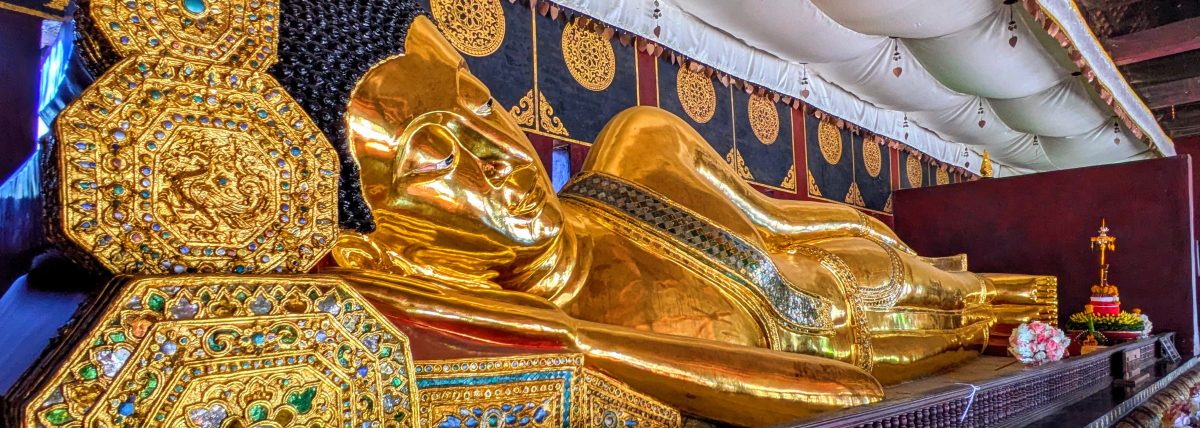
 

Emptiness from One Side, Fullness from Another – Osho

For a few moments the other morning, while watching you, I saw that nobody was there. I saw the emptiness, the hollow bamboo. Why did I find this spooky and awesome when you have been speaking of the beauty of emptiness for years?

It is just because from your very childhood you have been told that the goal is not emptiness, but fullness. Emptiness symbolizes the beggar’s bowl. In the West particularly, the word ‘emptiness’ never achieved any positive meaning. In the East the case is different.

We have two words for emptiness. One – which will translate the English word ‘emptiness’ – is riktata. It simply means absence of something. And the other is shunyata for which, in the Western languages, there is no equivalent because that kind of experience has not happened in the West.

Shunyata is emptiness from one side, and fullness from another side. For example, this room is full of people now, furniture, things. We can empty it – all the people can leave the room, all the furniture can be removed – and then somebody can come and see and can say, “The room is empty.” He is just seeing one side of the phenomenon.

What he is saying is that the things that were in the room are not there. But he is forgetting that now the room is full of roominess. The room has more space now than it had before. Before it was cluttered; its space was cut up into pieces – furniture, people, things. Now it is clean, now it is pure. Now it is itself, full of itself. That is the meaning of shunyata in the East; the second side – which has been overlooked in the West.

So the Western mind has a certain antagonism about emptiness because it knows only its negative aspect. It does not know its positive side. That’s why it looks spooky, fearsome.

And moreover, when I am sitting here talking to you and suddenly you become aware that there is nobody – the chair is empty – it becomes more spooky. You start feeling as if you are seeing something which is not the case; or, if this is the case, then just a moment before you were seeing a person when that person was not real, ghostly.

You have to look deeply into the phenomenon of the enlightened person. He is and he is not – both together. He is because his body is there; he is not because his ego is no longer there. All the furniture of the mind has been removed: now it is really a hollow bamboo. And if the hollow bamboo is functioning as a flute, then too it does not become anything else other than a hollow bamboo. And the experience becomes even more mysterious because the hollow bamboo flute is creating a music.

The Western mind has been trained to think that nothing can come out of nothing. The Eastern mind has been trained to see that everything comes out of nothing. And modern physics agrees with the mystics of the East.

It is very surprising that the modern Western physics goes against all Western religions and agrees with all the Eastern mystics. The same experience . . . The hollow bamboo is not giving you music of its own, somebody else – perhaps existence itself, perhaps a strong wind passing through the hollow bamboo – is creating music. But the music is coming in from one side and is going out from the other side; the flute remains hollow.

The West is so much interested in things being solid, steel-solid. It is not a coincidence that it creates men like Stalin. The word ‘stalin’ in Russian means ‘man of steel’. It was not his name; it was given because he was so like solid steel – there was no hollowness in him. Hollowness is condemned. When you want to condemn somebody you say, “He is just hollow.”

But in the East it is a totally different thing. The greatest mystics – Gautam Buddha, Lao Tzu, Bodhidharma – they all call themselves hollow bamboos. They have disappeared as an ego. There is no one who can say, “I am”, and yet the whole structure is there, and inside is pure space. And that pure space is your divineness, your godliness; that pure space is what, on the outside, is pure sky. The sky only appears to be – it does not exist. If you go in search of sky, you will not find it anywhere; it is only an appearance.

The enlightened man has an appearance like the sky, but if you get in tune with him sometimes you will find he is not. That can make you feel spooky, afraid; and that’s what must have happened.

You got in tune with me. In spite of yourself, once in a while you will get in tune with me. You may forget yourself once in a while and will get in tune with me – because only if you forget your ego can there be a meeting. Otherwise, there cannot be any meeting. And in that meeting you will find that the chair is empty. It may be just a glimpse for a moment, but really you have seen something far more real than anything else that you have ever seen. You have looked inside the hollow bamboo and seen the miracle of the music coming out of it.

-Osho

From Transmission of the Lamp, Discourse #26, Q3

Copyright © OSHO International Foundation

An MP3 audio file of this discourse can be downloaded from Osho.com, or you can read the entire book online at the Osho Library.

Many of Osho’s books are available in the U.S. online from Amazon.com and Viha Osho Book Distributors. In India they are available from Amazon.in and Oshoworld.com.

A Map from Mind to No-Mind

Recently I have been writing about my inquiry into the movement from mind to no-mind and I have posted some links below. But this morning I spent time investigating the nuts and bolts, the nitty-gritty of that movement.

So first to recap:

Our first responsibility on the road from mind to no-mind is to create the watcher. All meditation begins with this creation. We begin to pay attention to our surroundings — we watch others. This is the easiest place to begin and the easiest place to watch. With this bit of watchingness, we move to watching the activities of our body — our own actions. With this increased strength of the watcher, we can now move to watch the movement of mind and the moods of the heart. In my experience, this is the stickiest.

It is important when watching the mind and heart to watch with a kind of indifferent watching, a watching without involvement, a watching without judging and also without analyzing. Now this watcher is beginning to gather some autonomy from the objects being watched.

Here is where we get into the nitty-gritty of this fabulous exploration into self inquiry.

The next step is quite a bit more subtle, and this gathered autonomy is a necessary prerequisite in order to be able to realize it. We move from watching the objects of awareness – the thoughts of mind and the feelings of the heart — to seeing the watching itself. It is in this seeing the watching that the objects move from the foreground to the background and then with lack of attention begin to dissipate. All of our watchingness is in seeing watching until there is no longer anything that is being watched and we are left only with seeing. A seeing that is relaxed and at ease because there is no longer any conflict or separation. A seeing that is totally conscious because no energy is being lost in objects. This is no-mind.

With this map from mind to no-mind we are free to move into mind; and free to move out of mind. That is not to say that the map is always at hand. Sometimes we misplace the map and can’t find our way home.

My own experience is that we have to make the journey many times and from different directions and still sometimes home is elusive and sometimes it is as present as the midday sun. Love.

-purushottama

For more on this topic, you may wish to explore:

Watching and also Forgetting the Content

The Awakening of the Double-Pointed Arrow

Meditation Involves all Three

Awakening Before Enlightenment

After Awakening Before Enlightenment

Watching and also Forgetting the Content

This last week’s meditation program, Program #05: Like the Empty Sky it has No Boundaries, inspired the latest posting on another koan.

Osho speaks about both watching the mind and forgetting the content. The two together seem to be quite a paradox. If I watch the mind, how can I forget the content? And if I forget the content, how can I watch the mind? When I first try to put into practice both of these instructions, I find that I am constantly flipping back and forth. So how can I simultaneously watch the activities of the mind and forget the content?

What I have found is that if I watch the mind in the same way as I watch a movie or a television show then indeed there is no way to both watch and forget the content. But if I watch with the qualities that are prescribed by Osho, that is watching without grasping and without rejecting, watching without analyzing, and watching without judging and at the same time remember that I am the watcher and not the content (the double-pointed arrow), then slowly, slowly the content begins to evaporate and I am left with only a watchingness without content. And so, here I am watching, and the content is forgotten, or more accurately the content has disappeared on its own, and there is no more flipping back and forth, at least until of course I fall out of watching with these qualities.

-purushottama

For more on this topic, you may wish to explore:

The Awakening of the Double-Pointed Arrow

Meditation Involves all Three

Awakening Before Enlightenment

After Awakening Before Enlightenment

See all 0f Prem’s notes.

The Bridegroom is Waiting for You – Osho

Now, try to understand these sutras of Patanjali.

The seen which is composed of the elements and the sense organs is of the nature of stability, action, and inertia, and is for the purpose of providing experience and thus liberation to the seer.

 The first thing to be understood is that the world exists for you to be liberated. Many a time the question has arisen in your mind: “Why does this world exist? Why is there so much suffering? For what? What is the purpose of it?” Many people come to me and they say, “This is the ultimate question — ‘Why are we at all?’ And if life is such a suffering, what is the purpose of it? If there exists a God, why can’t he destroy all this chaos? Why can’t he destroy this whole suffering life, this hell? Why does he go on forcing people to live in it?” Yoga has the answer: Patanjali says, ” . . . for the purpose of providing experience and thus liberation to the seer.”

It is a training; suffering is a training — because there is no possibility of becoming mature without suffering. It is like fire: the gold, to be pure, has to pass through it. If the gold says. “Why!” then the gold remains impure, worthless. Only by passing through the fire will all that is not gold be burned, and only the purest gold will remain. That’s what liberation is all about: a maturity, a growth so ultimate that only the purity, only the innocence remains, and all that was useless has been burned.

There is no other way to realize it. There cannot be any other way to realize it. If you want to know what satiety is, you will have to know hunger. If you want to avoid hunger, you will avoid satiety also. If you want to know what deep quenching is, you will have to know thirst, deep thirst. If you say, “I don’t want to be thirsty,” then you will miss that beautiful moment of deep quenching of the thirst. If you want to know what light is, you will have to pass through a dark night; the dark night prepares you to realize what light is. If you want to know what life is, you will have to pass through death; death creates the sensitivity in you to know life. They are not opposites; they are complementary.

There is nothing which is opposite in the world; everything is complementary. “This” world exists so that you can know “that” world; “this” exists to know “that.” The material exists to know the spiritual; the hell exists to come to heaven. This is the purpose. And if you want to avoid one you avoid both, because they are two aspects of the same thing. Once you understand, there is no suffering: you know this is training, a discipline. Discipline is to be hard. It has to be hard because only then will real maturity come out of it.

Yoga says this world exists as a training school, a learning school — don’t avoid it and don’t try to escape from it. Rather live it and live it so totally that you need not be forced again to live it. That’s the meaning when we say that an enlightened person never comes back — there is no need. He has passed all the examination that life provides. He need not come back. You have to be forced again and again to the same life pattern because you don’t learn. You go on repeating the experience without learning. The same experience you repeat again and again — the same anger. How many, how many thousand times have you been angry? Count it. What have you learned out of it? Nothing. Whenever the situation arises, you will be angry again — the same, as if it is for the first time that you are getting into anger.

How many times has greed, lust possessed you? Again, it will possess. And again, you will react in the old way — as if you have decided not to learn. And to be ready to learn is to be ready to become a yogi. If you have decided not to learn, if you want to remain blindfolded, if you want to repeat the same nonsense again and again; then you will have to be thrown back: you will have to be sent back to the same class — unless you pass.

Don’t take life in any other way. It is a vast training school, the only university there is. The word “university” comes from “universe.” In fact, no university should call itself “university”; the name is too big. The whole universe is the only university. But you have created small universities, and you think that when you pass through them you have become entitled, as if you have become a knower. No, these small, man-made universities won’t do. You will have to pass through this university your whole life.

Says Patanjali, ” . . . for the purpose of providing experience and thus liberation . . .” Experience is liberating. Jesus has said, “Know the truth and the truth will liberate you.” Whenever you experience a thing, alert, aware, fully watching what is happening — participating and watching together — -it is liberating. Immediately, something arises out of it: an experience which becomes true. You have not borrowed it from scriptures; you have not borrowed it from somebody else.

Experience cannot be borrowed; only theories can be borrowed. That’s why all theories are dirty, because they have been passing through so many hands, so many millions of hands. They are just like dirty currency notes. Experience is ever fresh — fresh like the dew in the morning, fresh like this morning’s rose. Experience is always innocent and virgin — nobody has ever touched it. You come upon it for the first time. Your experience is yours, it is nobody else’s, and nobody Can give it to you.

Buddhas can indicate the way, but you have to walk. No Buddha can walk for you; there is no possibility. A Buddha cannot give his eyes to you so that you can look through them. Even if the Buddha gives you the eyes, you will change the eyes — the eyes will not be able to change you. When the eyes will be fit into your mechanism, your mechanism will change the eyes themselves, but the eyes cannot change you. They are parts; you are a very big phenomenon.

I cannot lend my hand to you. Even if I do, the touch will not be mine, it will be yours. When you will go and feel something — even from my hand — it will be you who will feel, not my hand. There is no possibility of borrowing reality.

Experience liberates. Every day I come across people who say, “How is one to get free from anger? How is one to get free from sex, lust? How is one to get free from this and that?” And when I say, “Live it through,” they are shocked. They had come to me in search of a method to repress themselves. And if they had gone to another guru in India, they would have found some method to repress themselves with. But repression can never be liberating, because repression means repressing experience. Repression means cutting all the roots of experience. It can never be liberating. Repression is the greatest bondage that you can find anywhere.

You live in a cage. Just the other day, one new sannyasin told me, “I feel like an animal in a cage.” There is every possibility that he meant that he wanted me to help him so that the animal is killed, because we say “animal” only when we condemn. The very word carries condemnation. But when I told the sannyasin, “Yes, I will help you. I will break the cage and make the animal completely free,” he was a little shocked; because when you say “animal” you have already valued it, condemned it — it is not a simple fact. In the very word “animal” or “animality” you have said everything that you wanted to say. You don’t accept it. You don’t want to live it. That’s why you have created the cage.

Cage is character. All characters are cages, imprisonments, chains around you. And men of character are imprisoned men. A really awakened man is not a man of character. He is alive. He is fully alive, but he has no character, because he has no cage. He lives spontaneously; he lives through awareness — so nothing can go wrong — but he has no cage around him to protect him.

The cage is a substitute for awareness. If you want to live a sleepy life you need character, so the character gives you guidelines. Then you need not be alert. You are going to steal something — the character just hinders you: it says, “No! This is wrong! This is sin! You will suffer in hell! Have you forgotten the whole Bible? Have you forgotten all the punishment that a man has to go through?” This is character. This is just hindering you. You want to steal; character is just a hindrance.

A man of awareness will not steal, but he has no character; and that is the miracle and the beauty. He has no character, and he will not steal, because he understands. Not that he is afraid of sin — there is nothing like sin; at the most, errors — nothing like sin. He is not afraid of being punished, because punishment is not in the future — it is not that sins are punished, in fact: sins are the punishment. It is not that you are angry today and tomorrow you will be punished or in the next life — sheer nonsense. When you put your hand in the fire today, do you think it will be burned in the next life? When you put your hand in the fire today it burns today; immediately it burns. Putting the hand in and the burning of it — all simultaneous. Not even a single moment’s gap. Life never believes in the future because life is only present.

Not that sins will be punished in the future, sins are the punishment. Intrinsic punishment is there: you steal and you are punished. In the very stealing you are punished — because you are more imprisoned: you will become more afraid; you will not be able to face the world; continuously, you will feel some guilt, you have done something wrong, any moment you can be caught. You are already caught! Maybe nobody ever catches you and no court punishes you — and there is no other heavenly court anywhere — but you are caught. You are caught by yourself. How will you forget it? How will you forgive yourself? How will you undo the thing that you have done? It will linger and linger. It will follow you like a shadow; it will haunt you like a ghost. It itself is the punishment.

Character hinders you from committing wrong things, but it cannot hinder you from thinking them. But to steal or to think about it is the same. To commit a murder really and just to think about it is the same, because as far as your consciousness is concerned you have committed it if you have thought about it. It never became action because the character hindered you; if the character was not there it would have become action. So in fact character, at the most, does this: it hinders the thought; it doesn’t allow it to be transformed into action.

It is good for the society, but nothing good for you. It protects the society; your character protects the society. Your character protects others, that’s all. That’s why every society insists on character, morality, this and that; but it does not protect you.

You can be protected only in awareness. And how to gain awareness? There is no other way except to live life in its totality. ” . . . for the purpose of providing experience and thus liberation to the seer.”

“The seen which is composed of the elements and the sense organs is of the nature of . . .” three gunas. Yoga believes in three gunas: sattva, rajas, tamas. Sattva is the quality which makes things stable; rajas is the quality which gives action; and tamas is the quality which is inertia. These three are the basic qualities. Through these three this whole world exists. This is the yoga trinity.

Now physicists are ready to agree with yoga. They have split the atom and they have come across three things: electrons, neutrons, protons. Those three are of the same three qualities: one is of the quality of light — sattva — stability; another is of the quality of rajas — activity, energy, force; and the third is of the quality of inertia — tamas. The whole world consists of these three gunas; and through these three gunas, a man of awareness has to pass. He has to experience all these three gunas. And if you experience them as a harmony, which is the real discipline of yoga . . .

Everybody experiences: sometimes you feel lazy, sometimes you feel so full of energy; sometimes you feel so good and light, and sometimes you feel so evil and bad; sometimes you are a darkness, and sometimes you are a dawn. You feel all these gunas. Many moments of them come continuously, you move in a wheel, but they are not in proportion. A man of lethargy is ninety percent lethargy. He is active also — he has to be because just to keep on living a life of lethargy he will have to act a little. That’s all his activity is — just to support his inertia. And he has to be a little good to people also; otherwise people will be very, very bad to him. People will not tolerate his inertia.

Have you watched? People who are not very active . . . For example, very fat people are always smiling. That is their protection. They know they cannot fight. They know that if the fight happens, they cannot escape, they cannot “flight.” You always see very fat people smiling, happy. What is the reason? Why do thin people look sad and why do fat people never look so sad, always happy? Psychologists and physiologists say that is their protection, because in the struggle of life it will be very difficult for them to be always in a fighting mood, as lean and thin people always are. They can fight — if the other person is weak, they will beat him; if the other person is strong, they will escape. They can do both, and the fat person cannot do either — he goes on smiling; he goes on being good to everybody. That’s his protection so others should be good to him.

Lazy people are always good. They have never committed any bad thing because even to commit a sin one need be a little active. You cannot make a lazy person a Hitler, impossible. You cannot make a lazy person a Napoleon or Alexander, impossible. Lazy persons have not committed any great sin; they cannot. They are, in a way, good people because even to commit a sin or to do something bad they will have to be active — that’s not for them.

Then there are active people, unbalanced; they are always on the go. They are not worried in any way where to reach; they are only worried how to go with speed. They don’t bother about whether they are leaching anywhere — that is not the point at all. If they are moving with speed everything is okay. Don’t ask, “Where are you going?” They are not going anywhere; they are simply going. They have no destiny. They have only energy to be active. These people are the dangerous people in the world, more dangerous than the lazy people. Out of this second category come all Adolf Hitlers, Mussolinis, Napoleons, Alexanders. All mischief-mongers come from the second category because they have energy, a disproportionate energy.

Then there is a third kind of people, which is rare to find: somewhere a Lao Tzu just sitting silently — not lazy, passive. Not active, not lazy — passive: full of energy, a reservoir, but sitting silently. Have you watched somebody sitting silently, full of energy? You feel a field around him, radiant with life, but still — not doing anything, just being.

And yoga is to find the equilibrium between these three. If you can find a balance between these three, suddenly you transcend. If one is more than the others, then that one becomes your problem. If you are more lazy than active, then laziness will be your problem: you will suffer through it. If activity is more than laziness, then you will suffer from your activity. And the third is never more, it is always less; but even if that is theoretically possible — that somebody is too good — that too will be a suffering for him, that too will create imbalance. A right life is a life of balance.

Buddha has eight principles for his disciples. Before every principle he adds a word, sama. If he says, “Be aware,” he not only says “smriti,” he says “samyak smriti.” In English they have always been translating it as “right memory.” If he says, “Be active,” he always says, “Be rightly active.” By “rightly” he means be in an equilibrium. The Indian term samyak means equilibrium. Even for samadhi, even for meditation, Buddha says “samyak samadhi.” Even samadhi can be too much, and then it will be dangerous. Even good can be too much, and then it will be dangerous.

Equilibrium should be the key factor. Whatsoever you do, always be balanced like a man walking on a tightrope, continuously balancing. That is the rightness: the factor of balance. The man who wants to attain to the ultimate marriage, ultimate yoga, has to be in a deep balance. In balance you transcend all the three gunas. You become gunateet: you go beyond all these three attributes. You are no longer part of the world; you have gone beyond.

The three gunas — stability, action, and inertia — have four stages: the defined, the undefined, the indicated, and the unmanifest.

These three gunas have four stages. The first, Patanjali calls “the defined.” You can call it matter; that is the most defined thing around you. Then, “the undefined” — you can call it mind; that too is there, felt by you continuously, but is an undefined factor. You cannot define what mind is. You know it, you live it continuously, but you cannot define it. Matter can be defined but not mind. And then “the indicated” — the indicated is even subtler than the undefined: it is the self. You can only indicate it. You cannot even say it is undefined because to say something is undefined is, in a subtle way, to define it, because that too is a definition. To say that something is undefined . . . you have already defined it in a negative way; you have said something about it. So, then, there is this subtle layer of existence, which is self, that is the indicated. And then beyond it there is again the subtlest which is “the unmanifest” — unindicated — that is, no-self.

So: matter, mind, self, no-self — these are the four stages of all these three gunas.

If you are deeply in lethargy, you will be like matter. A man of lethargy is almost matter, vegetates; you don’t find him alive. Then there is the second quality, mind. If rajas, activity, is too much, then you become too much of the mind. Then you are very, very active — mind is continuously active, obsessed with activity, continuously in search of new occupations. Somebody asked Edmund Hillary, who was the first man to reach the Everest peak, “Why? Why did you take such a risk?” He said, “Because the Everest peak was there, man had to go.” There is nothing . . . Why is man going to the moon? Because the moon is there. How can you avoid it? You have to go. A man of activity is continuously in search of occupation. He cannot remain unoccupied, that is his problem Unoccupied he is hell; occupied he forgets himself.

If tamas, inertia, is too much, you become like matter. If rajas is too much you become mind: mind is activity. That’s why mind goes mad. Then, if sattva is too much you become self, you become atma. But that too is an imbalance. If all the three are in balance, then comes the fourth, the no-self. That is your real being where not even the feeling of “I” exists, that’s why the term “no-self.”

These are the four stages — three of un-equilibrium, and the fourth of equilibrium. First is defined, second is undefined, third is indicated, fourth is not even indicated. unindicated; and the fourth is the most real. The first seems to be most real because you live in the first. The second seems to be very near because you live in the mind. The third even seems to be a little far away, but you can understand. Fourth seems to be simply unbelievable — no-self? Brahman, God, whatsoever you name it, seems to be very far away, seems to be almost non-existential; and that is the most existential.

The seer, although pure consciousness, sees through the distortions of the mind.

And that fourth, even if you attain it . . . while you are in the body you will have to use all the layers of your being. Even a Buddha, when he talks to you, has to talk through the mind. Even a Buddha, when he walks . . . he has to walk through the body. But now, once you have known that you are beyond mind, the mind can never deceive you: you can use it and you will never be used by it. That’s the difference. Not that a Buddha doesn’t use mind, he uses: he uses; you are being used. Not that he doesn’t live in the body: he lives; you are being lived — the body is the master and you are the slave. Buddha is the master; the body is the slave. A total change, a total mutation happens — that which is up goes down and that which is down goes up.

The seen exists for the seer alone.

This is the climax of yoga or vedanta: “The seen exists for the seer alone.” When the seer disappears, the seen disappears, because it was there only for the seer to be liberated. When the liberation has happened, it is not needed. This will create many problems because a Buddha . . . for him the seen has disappeared, but for you it still exists. There is a flower, somebody amongst you becomes an enlightened person: for him the flower has disappeared, but for you it still continues. So how is it possible — for one it disappears and for you it continues?

It is just like this: you all go to sleep this night, you all dream; then, one person becomes awake — his sleep is broken, his dream disappears — but all others’ dreams continue. His disappearance of the dream does not help in any way for your dreams to be disturbed; they continue on their own. That’s why enlightenment is individual. One person becomes awakened; all others continue in their ignorance. He can help others to be awakened. He can create devices around you to help you come out of your sleep, but unless you come out of your sleep your dream will continue: “The seen exists for the seer alone.”

Although the seen is dead to him who has attained liberation, it is alive to others because it is common to all.

 In India we have made only one distinction between dream and that which you call reality, and this is the distinction: that dreams are private realities and this reality that you call the world is a common dream, that’s all. When you dream you dream a private world. In the night you live a private life; you cannot invite anybody else to share in your dream. Even your closest friend or your wife or your beloved is far away. When you are dreaming you are dreaming alone. You cannot take anybody there; it is a private world. Then what is this world, because in India we have called this world also dreamlike? This is a common dream. We all dream together because our minds function in the same way.

Just go to the river. Take a straight stick with you; you know the stick is straight. Push it down in the river: immediately, you see it has become crooked, bent. Pull it out; you know it is straight. Again put it in the water; it has again become bent. Now, you know well that the stick remains the same, but the functioning of your mind and the functioning of the light rays create the phenomenon, illusion, that it has become bent. Even if you know now, still it will be bent. Your knowledge will not help. You know well, perfectly well, it is not bent, but it looks bent — because the functioning of the eyes and the light rays is such that the illusion is created. Then take a dozen friends with you: you all will see it bent. It is a common illusion. The world is a common dream.

The seer and the seen come together so that the real nature of each may be realized.

The cause of this union is ignorance.

To be united with this world. which is like a dream, to be united with the body, with the mind — which you are not — is a necessity. Through this union you will be prepared for a greater union. Through this union you will come to realize that this union is false. The day you realize that this union is false, the final union will happen.

When you are divorced from the world, you get married to the divine. When you are married to the world, you remain in a divorce from God. That’s why all the mystics — Meera, Chaitanya, Kabir; in the West, Theresa — they all talk in terms of marriage, in terms of bride and bridegroom. And they are all waiting for a final consummation.

The allegory has always been used. Psychologists have even become suspicious about it, about why mystics use that allegory of love, marriage, embrace, kiss. In India even sexual intercourse has been used as an allegory: when the final marriage happens there is the ultimate crescendo, the total orgasm of the individual with the whole, of the wave with the ocean.

Why do these people use sexual allegories? Psychologists suspect that there must be some repression about sex. They are wrong. There is no repression about sex, but sex is such a fundamental phenomenon, how can religion avoid it? It has to be used. And sex is the only, the deepest, phenomenon where you lose yourself. You don’t know any other phenomenon where you lose yourself so completely. And in God or in the total one loses himself completely — becomes a no-self. In sex just a little glimpse of it comes to you. It is good to use the allegory of marriage, of bride and bridegroom.

Remain married to the world and you remain divorced from the divine. Pass through the worldly experience — enriched, liberated — suddenly you become aware that this marriage was illusory, a dream. Now, the real marriage is getting ready for you. The bridegroom is waiting for you.

-Osho

From Yoga: A New Direction, Discourse #5; Yoga: Science of the Soul, V.5 (previously titled Yoga: The Alpha and the Omega, V.5)

Copyright © OSHO International Foundation

An MP3 audio file of this discourse can be downloaded from Osho.com or you can read the entire book online at the Osho Library.

Many of Osho’s books are available in the U.S. online from Amazon.com and Viha Osho Book Distributors. In India they are available from Amazon.in and Oshoworld.com.

Meditation Involves all Three

Osho often talks about the difference between concentration, contemplation and meditation or dhyana. Mostly, he is making a distinction in order to prod us on into real meditation or dhyana. But just this morning, and it is so obvious I am almost embarrassed to say that it was a realization, I did, in fact, realize that meditation involves all three. Many times, when I begin my sitting, I first gather myself to move out of identification with the mind into being able to watch the mind. So first, I am focusing my energy into watching. This is concentration.

Only after the watching is concentrated am I able to watch the mind with indifference, to watch the mind like I would watch a river flow from the bank. This watching is equal to contemplation. Just letting the thoughts flow without interference.

If I am able to watch without grasping, without rejecting, without judging and without analyzing, then the flow of thought begins to subside. It is the grasping, rejecting, judging, interfering that perpetuates the movement of thought. When I am able to watch without doing those things and thought subsides, that is when dhyana begins to be revealed. When there is nothing to be seen and there is only watchingness, awareness aware of itself, that is dhyana.

-purushottama

For more on this topic, you may wish to explore:

The Awakening of the Double-Pointed Arrow

Watching and Forgetting the Content

Awakening Before Enlightenment

After Awakening Before Enlightenment

See all 0f Prem’s notes.